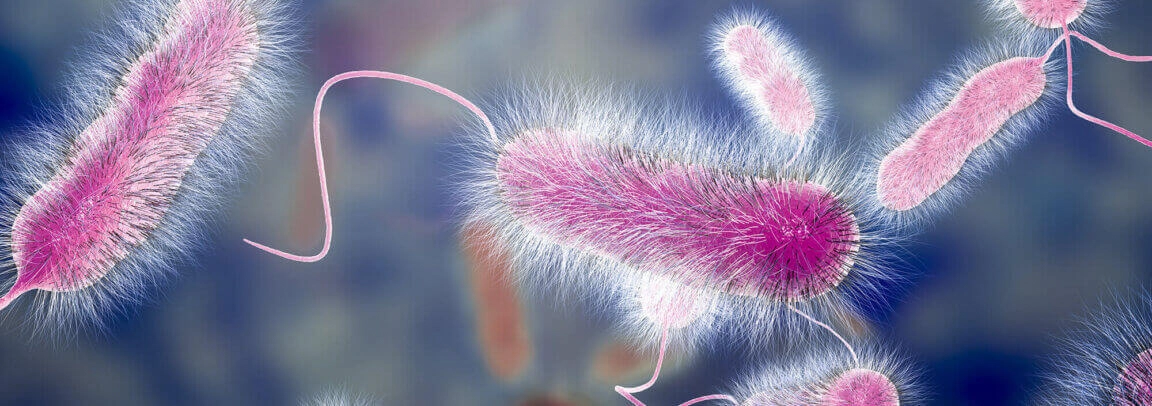
Legionella pneumophila is a waterborne bacterium which can lead to fatal respiratory diseases in humans, such as Legionnaires’ disease or a milder illness called Pontiac fever.
A worldwide concern
Legionella is naturally occurring and is widespread in ponds, rivers, and other natural water systems. When this bacterium enters water systems in the built environment, conditions such as water temperature and ineffective disinfection levels, can encourage rapid growth.
There are over 60 species of Legionella but Legionella pneumophila is the species that causes over 97% of Legionnaires’ disease outbreaks across the world1. This bacterium also causes a milder illness called Pontiac fever, which triggers flu-like symptoms.
This bacterium has several serogroups. A serogroup is a way to classify bacteria and differentiate its various bacterial strains. Legionella pneumophila serogroup 1 is most often linked with human diseases causing around 80-90%2 of cases, but serogroups 2-15 can also cause pneumonia.
Legionnaires’ disease has a death rate of 10%3 if contracted in the community, rising to 25%4 in a healthcare setting.
Legionnaires’ disease is a severe form of pneumonia which can be fatal. Contaminated tiny water droplets (aerosols) can be inhaled where they can infect the lungs. If the infection is not contained or treated early on, it can cause confusion, coma, heart failure and ultimately death. According to the World Health Organisation (WHO) Legionnaires’ disease in untreated immuno-suppressed patients the death rate could be as high as 40-80%.5
Legionnaires’ disease has been seen to cause health related quality of life impacts in 7 out of 8 people6 who have recovered from the disease. They experience one or more long-term symptoms such as:
Fatigue – extreme tiredness
Memory Loss – loss of the ability to store and remember information
Difficulty Concentrating – a decreased ability to focused thoughts
Cerebellar Dysfunction – balance and coordination difficulties
Retrograde Amnesia – where memories before contracting the event cannot be recalled
Post-traumatic Stress Disorder – also known as PTSD, is an anxiety disorder that is a result of a traumatic event.
Why is Legionella pneumophila so dangerous?
Legionella pneumophila serogroup 1 is the primary cause of illness in humans, with serogroups 2-15 also causing illness. Let us unpack how this potentially deadly bacterium has the power to negatively affect human health:
Secretion Systems
Legionella pneumophila can inject effector proteins into host cells, helping them set up a replicative niche, and sheltering them from our immune defences.
Intracellular Parasitism
Legionella pneumophilais great at surviving and multiplying inside host cells, especially in human lungs, as it dodges our immune response.
Endotoxin Production
When this bacterium dies, it releases endotoxins that amplify inflammation in our lungs.
Considering Legionella pneumophila’s virulence and its adaptability it is a pivotal public health concern. So, the best way to avoid it ever reaching human lungs is to find it, fast!
Any water source producing aerosols should be considered at risk for transmission of Legionella bacteria, including cooling towers, spa and pools, fountains, showers, taps, car washes, air conditioning units, misters, hoses, and humidifiers amongst others.
Why is VBNC Legionella a real threat?
VBNC Legionella stands for Viable But Non-Culturable Legionella. This refers to a state where Legionella bacteria are still alive but cannot be detected using standard laboratory culturing methods. In this state:
Alive, but dormant: The bacteria are alive and capable of causing harm but are in a dormant or stressed state, making them undetectable by traditional lab tests.
Triggered by stress: VBNC occurs in response to environmental stresses, such as temperature changes, nutrient depletion, or exposure to disinfectants in water systems.
Health risks remain: Even though they are undetectable by culturing, VBNC Legionella can become active and infectious when conditions improve, posing a serious health risk.