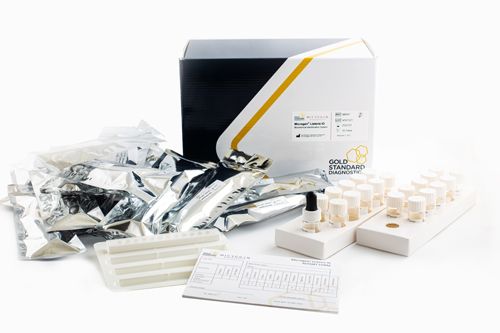
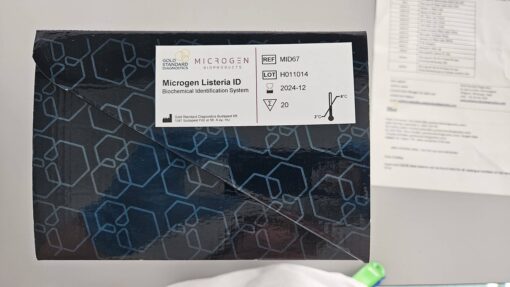
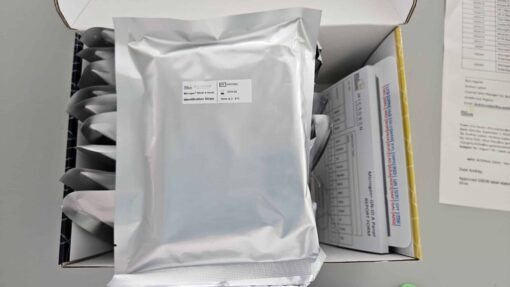
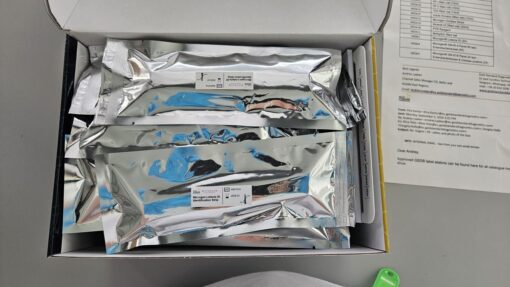
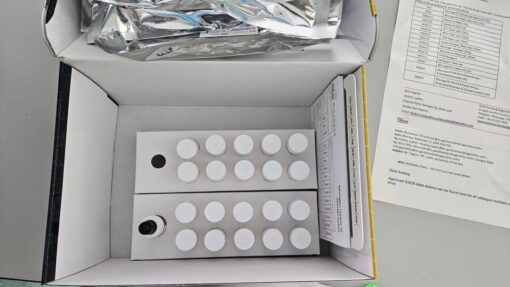
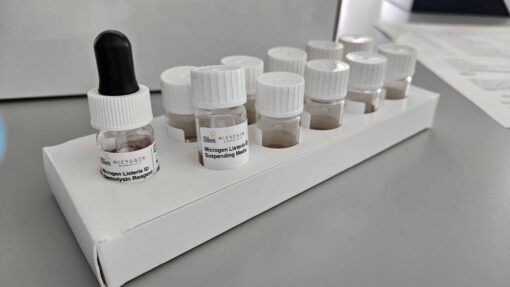
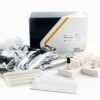
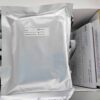
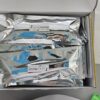
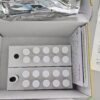
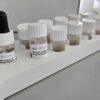
The Microgen Listeria-ID, available in Thailand through BCST, is a standardized 12-well biochemical identification system for the differentiation of six Listeria species from selective or non-selective agar — without the need for additional confirmatory tests. Results are available in 18–24 hours. Each kit contains 20 tests.
Species identified:
Listeria monocytogenes
Listeria innocua
Listeria ivanovii
Listeria welshimeri
Listeria grayi
Listeria seeligeri
Limited stock available in Thailand. Current batch expiry: 07 October 2026. Contact BCST immediately to confirm availability and arrange delivery.
Listeria Identification in Thailand — Why Species-Level Differentiation Matters
Listeria identification in Thailand, supported by the Microgen Listeria-ID system available through BCST, addresses one of the most critical decisions in food microbiology — determining not simply that a Listeria isolate is present, but precisely which species it represents. This distinction carries direct regulatory and public health significance. Listeria monocytogenes is a serious human pathogen responsible for listeriosis — a potentially fatal foodborne illness with a case fatality rate of approximately 20–30% in high-risk populations. Consequently, regulatory frameworks in the EU, the USA, Japan, and most international export markets impose zero-tolerance limits for L. monocytogenes in ready-to-eat food products.
Thai food producers supplying export markets must not only detect Listeria — they must identify it to species level. A presumptive positive that cannot be confirmed to species level creates a regulatory and commercial problem that delays product release, triggers further investigation, and in worst-case scenarios leads to product rejection or recall. The Microgen Listeria-ID system resolves that uncertainty in 18–24 hours without the need for additional confirmatory tests — using the same biochemical tests recommended in international standard methods.
BCST distributes the Microgen Listeria-ID system in Thailand. Limited stock is currently available with a batch expiry of 07 October 2026. Contact BCST immediately to confirm availability before this stock is exhausted.
The Six Species the Microgen Listeria-ID Identifies
The Microgen Listeria-ID system simultaneously differentiates the following six members of the genus Listeria from a single isolate in a single test run:
Species
Pathogenicity
Regulatory Significance
Listeria monocytogenes
Primary human pathogen — causes listeriosis
Zero tolerance in RTE foods — EU, USA, Japan, most international markets
Listeria ivanovii
Animal pathogen — rare human cases
Differentiation from L. monocytogenes required
Listeria innocua
Non-pathogenic
Commonly co-isolated with L. monocytogenes — must be distinguished
Listeria welshimeri
Non-pathogenic
Differentiation required for accurate environmental monitoring
Listeria grayi
Non-pathogenic
Differentiation required for complete species reporting
Listeria seeligeri
Rarely pathogenic
Differentiation required — carries some virulence factors
The ability to differentiate all six species from a single test is clinically and commercially significant. Laboratories that cannot distinguish L. innocua from L. monocytogenes — two species commonly co-isolated in food environments — risk both false positive and false negative reporting, each with serious consequences for food safety management.
The Science — How Microgen Listeria-ID Works
The Principle — 12-Well Biochemical Identification
Each Microgen Listeria-ID microwell test strip contains 12 wells — 11 wells containing dehydrated substrates for specific biochemical reactions, and one empty well for the performance of a haemolysin reaction. The biochemical panel is designed using a combination of substrates recommended in international standard methods (ISO 11290, EN ISO 11290) plus additional tests that enhance differentiation between species.
The 11 biochemical reactions assessed are: Esculin Hydrolysis, and carbohydrate fermentation of Mannitol, Xylose, Arabitol, Ribose, Rhamnose, Trehalose, Tagatose, Glucose-1-Phosphate, Methyl-D-Glucose, and Methyl-D-Mannose. The 12th well performs a haemolysin reaction — the key differentiator for L. monocytogenes, which is the only pathogenic species producing the beta-haemolysin listeriolysin O.
Positive Reactions — What You Are Looking For
For the carbohydrate fermentation wells (wells 2–11), a positive reaction produces a color change from purple to yellow as acid end products change the Bromocresol Purple indicator. Well 1 (Esculin Hydrolysis) produces a black color on positive. Well 12 (Haemolysin) is interpreted by the presence of a straw-brown homogeneous solution — either total haemolysis (no button of red blood cells) or partial haemolysis (significantly reduced button) — both scored as positive. A clear solution with a large intact button of red blood cells at the well bottom is a negative haemolysin result.
The Octal Code and Microgen Identification Software
Results from the 12 wells are recorded and arranged into triplets. Each triplet generates a single digit of an Octal Code using assigned numerical values (1, 2, or 4 per well). The resulting Octal Code is entered into the Microgen Identification System Software (GSD-MID60 — not supplied, required separately), which generates a ranked report of the five most likely organism identities based on the validated database. This software-assisted identification removes subjectivity from the interpretation step and produces a documented, auditable identification result.
Kit Specifications
Parameter
Detail
Cat. No.
GSD-MID67
Product
Microgen Listeria-ID
Format
12-well microwell test strip
Tests per kit
20 tests
Genus identified
Listeria spp.
Species differentiated
L. monocytogenes, L. innocua, L. ivanovii, L. welshimeri, L. grayi, L. seeligeri
Incubation temperature
35–37°C, non-fan assisted incubator
Reading time
18–24 hours — no reagents added on Day 2
Kit contents
20 microwell test strips in individual foil pouches, 20 bottles of Listeria Suspending Medium (2.5 ml each), 1 bottle of Haemolysin Reagent, holding frame, result forms
Storage — strips
2–8°C in unopened foil pouches until expiry date
Storage — suspending broth and haemolysin reagent
2–8°C. Do not freeze. Return haemolysin reagent to refrigerator immediately after use
Current batch expiry
07 October 2026
Inoculum source
Selective or non-selective Listeria agar — 18–24 hour culture
Software required
Microgen Identification System Software MID60 (not supplied)
Professional laboratory use only — not for clinical or medical diagnostic purposes
Manufacturer
Microgen Bioproducts Ltd (distributed by Gold Standard Diagnostics)
Thailand distributor
BCST — Biochem Scitech Co., Ltd.
Pre-Test Requirements — Prior Characterization of Isolates
Before inoculating the Microgen Listeria-ID system, isolates must be confirmed as belonging to the genus Listeria through four preliminary characterization steps. First, Gram staining must confirm the isolate as a short Gram-positive bacillus. Second, oxidase testing must return a negative result — Listeria is oxidase negative. Third, catalase testing must return a positive result. Fourth, motility testing at 25°C must confirm motility, while the same isolate should be non-motile at 37°C.
These preliminary checks are mandatory. Inoculating non-Listeria isolates into the system will produce unreliable identification results.
How to Use Microgen Listeria-ID — Step by Step
Step 1 — Prepare the inoculum. Bring the Listeria Suspending Medium to room temperature. Select a single well-isolated colony from an 18–24-hour culture on selective or non-selective agar. Emulsify the colony in the 2.5 ml vial of Listeria Suspending Medium until the suspension appears slightly cloudy. Mix thoroughly or vortex to produce a homogeneous suspension.
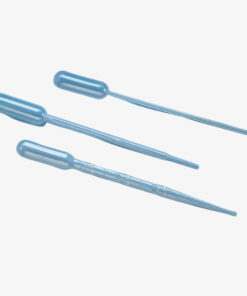
Step 2 — Inoculate the strip. Remove a microwell test strip from its individual foil pouch and place it in the holding frame. Remove the lid. Using a sterile Pasteur pipette, transfer 4 drops (approximately 100 µl) of the bacterial suspension to each well. Transfer 1 drop to a non-selective agar plate as a purity check. Add 1 drop of haemolysin reagent to well 12.
Step 3 — Incubate. Replace the lid. Incubate the strip at 35–37°C in a non-fan-assisted incubator for 18–24 hours. Incubate the purity check plate aerobically at 35–37°C for 18–24 hours simultaneously.
Step 4 — Read and record. After incubation, remove the lid and record all results on the report form provided. No reagents are added on Day 2. Interpret each well according to Table 1 of the IFU. Pay particular attention to the haemolysin well — total and partial haemolysis are both scored positive.
Step 5 — Generate the identification. Calculate the Octal Code from the recorded triplet values. Enter the Octal Code into the Microgen Identification System Software (MID60) to generate the ranked identification report.
Regulatory Context — Why Listeria Species Identification Is Required
Listeria monocytogenes is regulated under EU Commission Regulation (EC) No 2073/2005 on microbiological criteria for foodstuffs, which establishes zero tolerance in ready-to-eat foods intended for infants and for special medical purposes, and absence in 25g criteria for other ready-to-eat food categories. Codex Alimentarius principles on food hygiene similarly require Listeria monocytogenes control as a critical food safety parameter.
Thai food exporters supplying the EU, Japan, the USA, and other regulated markets must be able to provide documented, species-level Listeria identification as part of their food safety management system. The Microgen Listeria-ID system produces exactly that documentation — a software-generated identification report with an Octal Code that is auditable, reproducible, and based on biochemical tests aligned with international standard methods.
Applications
Food Production Environmental Monitoring
Food production facilities conducting environmental Listeria monitoring programs use the Microgen Listeria-ID system to confirm the species identity of isolates recovered from environmental swabs. Specifically, this allows facilities to distinguish L. monocytogenes — which requires immediate corrective action — from non-pathogenic Listeria species recovered from the same environment.
Food Product Testing Laboratories
Commercial and in-house food testing laboratories use the Microgen Listeria-ID system to confirm the species identity of Listeria isolates recovered from food products before issuing a final test report. Species-level identification is required to determine whether a positive Listeria finding constitutes a regulatory violation.
Quality Assurance in Meat, Dairy, and Ready-to-Eat Food Production
Meat processors, dairy operations, and ready-to-eat food manufacturers in Thailand use the Microgen Listeria-ID system as part of their HACCP-based food safety programs. The 18–24-hour turnaround and no-reagent Day 2 protocol minimizes the time between isolate recovery and definitive species identification — supporting rapid corrective action decision-making.
For the complete BCST microbiology and food safety testing product portfolio, visit the BCST product catalogue.
Important Stock Notice — Limited Availability
BCST currently holds limited stock of Microgen Listeria-ID (GSD-MID67). The current batch carries an expiry date of 07 October 2026, providing a minimum of four months of shelf life from the date of this notice for immediate purchase and deployment.
Laboratories that require the Microgen Listeria-ID system for ongoing environmental monitoring or food product testing programs should contact BCST immediately to secure available stock. Given the limited quantity available and the expiry timeline, BCST recommends early enquiry to avoid availability gaps.
Contact BCST at sales@bcst.co.th or call +66-92-4289163. Provide your required quantity and intended delivery timeline and BCST will confirm availability and issue a formal quotation promptly.
Frequently Asked Questions
Q: Can Microgen Listeria-ID be used directly from selective agar without pre-enrichment?
Yes. The Microgen Listeria-ID system can be inoculated directly from any Listeria selective or non-selective agar using an 18–24-hour culture. Pre-enrichment steps are not part of the Microgen Listeria-ID protocol — the system begins at the colony isolation stage, after selective or enrichment plating has already been completed.
Q: Is the Microgen Identification System Software (GSD-MID60) included in the kit?
No. The GSD-MID60 software is required for result interpretation but is not included in the GSD-MID67 kit. Contact BCST to confirm GSD-MID60 software availability if your laboratory does not already have it installed.
Q: What is the minimum remaining shelf life laboratories typically require?
Most food safety laboratories require a minimum of three to five months of remaining shelf life at the time of receipt for routine reagent procurement. The current BCST stock batch expires 07 October 2026. Contact BCST immediately to confirm whether the available shelf life meets your laboratory’s procurement requirements — early enquiry is strongly recommended given the limited stock position.
Q: Is Microgen Listeria-ID validated against international standard methods?
Yes. The biochemical substrate panel in the Microgen Listeria-ID system is based on tests recommended in ISO 11290 and EN ISO 11290 — the international standard methods for the detection and enumeration of Listeria monocytogenes in food and animal feed. Identification using the Microgen Listeria-ID system eliminates the need for additional confirmatory tests beyond those performed within the system itself.
Q: What documentation can BCST provide?
BCST provides the full Instruction for Use (IFU v6.0, January 2024) and Safety Data Sheet for Microgen Listeria-ID on request. Specify your documentation requirements at the time of enquiry.
Order Microgen Listeria-ID in Thailand — Act Immediately
Microgen Listeria-ID (MCG-MID67) is available in Thailand through BCST — Biochem Scitech Co., Ltd. Stock is strictly limited. The current batch expires 07 October 2026.
Contact BCST now at sales@bcst.co.th or call +66-92-4289163. Provide your required quantity and BCST will confirm availability and issue a formal quotation in Thai Baht within one business day.