Honey Analysis Thailand — Randox ELISA Kits and Biochip Array for Antibiotic Residue Screening | BCST
Randox honey analysis products, available exclusively in Thailand through BCST, address the primary compliance risk facing Thai honey producers and exporters — antibiotic residue contamination. Two platforms provide complete antibiotic surveillance coverage.
ELISA Kits — Chloramphenicol Fast and Tetracycline Sensitive. Validated individual antibiotic residue screening requiring only a microplate reader, incubator, and pipettes.
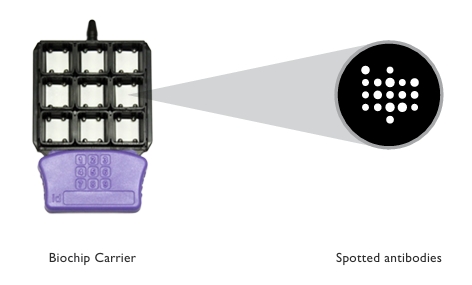
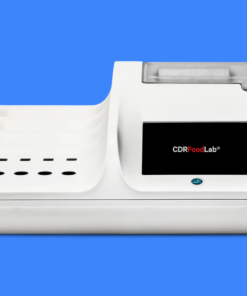
Biochip Array Kits — Antimicrobial Arrays I Ultra through V plus Antimicrobial Array III CAP Only — covering sulphonamides, quinolones, macrolides, tetracyclines, nitrofuran metabolites, and Chloramphenicol simultaneously using the Evidence Investigator. Up to 48 honey samples in 2.5 hours.
Note on honey quality parameters: HMF, Diastase, Glucose, Fructose, and Honey Colour testing is not currently available through Randox Food Diagnostics. Contact BCST if you require honey quality parameter testing — we will advise on alternative solutions.
Contact BCST for pricing, availability, and technical documentation.
Honey Analysis Thailand — The Antibiotic Residue Challenge
Honey analysis in Thailand, supported by Randox ELISA kits and Biochip Array solutions available through BCST, addresses the primary compliance risk that Thai honey producers and exporters face — antibiotic residue contamination. Antibiotics including Chloramphenicol and Tetracyclines have been detected in honey globally. Specifically, these detections occur at levels that violate EU and international maximum residue limits. Consequently, the EU has previously imposed import restrictions on honey from multiple countries because of Chloramphenicol contamination. For Thai honey exporters, a single confirmed finding results in immediate shipment rejection and potential market access suspension.
Randox provides two testing platforms for honey antibiotic surveillance — ELISA kits for targeted individual analyte screening, and Biochip Array kits for comprehensive multi-antibiotic simultaneous screening using the Evidence Investigator. Together, they cover every antibiotic residue class of commercial significance for Thai honey export compliance.
BCST distributes the complete current Randox honey analysis range in Thailand. For each product, BCST provides technical documentation and application support for integrating honey residue screening into quality management systems and export compliance documentation.
A note on honey quality parameters: HMF, Diastase, Glucose, Fructose, and Honey Colour testing is not currently available through Randox Food Diagnostics. EU Council Directive 2001/110/EC establishes minimum honey quality standards for these parameters. If you require honey quality parameter testing for EU export compliance, contact BCST — we will advise on currently available alternative solutions for this specific need.
Zero tolerance — EU, USA, Japan, most international markets
Commission Regulation (EU) 2023/915
Distinction
Accelerated protocol — shorter run time; first-line screening tool
Most sensitive tetracycline ELISA in the Randox honey range
Equipment required
Microplate reader 450 nm, incubator, pipettes
Microplate reader 450 nm, incubator, pipettes
ISO 9001
Yes
Yes
Why Chloramphenicol is zero-tolerance: Chloramphenicol causes aplastic anaemia — a potentially fatal suppression of blood cell production — at very low exposure levels. Consequently, it has no established MRL in honey in the EU, the USA, Japan, or most major markets. Any detectable level constitutes a violation. The Fast version delivers a faster result than the standard version — making it the appropriate choice for high-frequency routine screening where turnaround time is operationally significant. Commission Regulation (EU) 2019/1871
For honey packers, cooperatives, and exporters handling large volumes, Biochip Array screening replaces multiple individual ELISA assays with a single, efficient run. Specifically, the Evidence Investigator screens up to 48 honey samples in 2.5 hours. Multiple antimicrobial compounds are detected simultaneously from a single sample. As a result, testing cost per sample decreases, laboratory labor decreases, and each sample produces a more comprehensive compliance record.
Antimicrobial Array III CAP Only — the highest-sensitivity Chloramphenicol test in the range: At 0.14 ppb LOD in honey, this array provides more sensitive Chloramphenicol detection than the ELISA kits for dedicated high-volume Chloramphenicol surveillance programs. At a lower cost than the full Antimicrobial Array III, it is the most cost-effective option for operations running dedicated Chloramphenicol screening at high sample volumes.
How to Choose the Right Platform for Your Honey Operation
Requirement
Recommended Product
Routine Chloramphenicol screening — fast result
RDX-CN10171 Chloramphenicol Fast ELISA
Routine Tetracycline screening
RDX-TCS10117 Tetracycline Sensitive ELISA
High-sensitivity Chloramphenicol at scale
RDX-EV3738 Antimicrobial Array III CAP Only
Nitrofuran metabolite surveillance in honey
RDX-EV3695 Antimicrobial Array III
Comprehensive sulphonamide surveillance
RDX-EV3843 Antimicrobial Array I Ultra
Broad multi-antibiotic surveillance program
Multiple arrays — contact BCST for recommendation
Honey quality parameters (HMF, Diastase, etc.)
Not currently available from Randox — contact BCST
BCST advises on platform and array selection based on your specific testing volume, budget, and regulatory obligations. Contact us before making any Evidence Investigator investment decision.
Applications
Honey Producers and Beekeeping Operations
Thai honey producers use Chloramphenicol Fast and Tetracycline Sensitive ELISA kits to verify that their product is free from antibiotic residues before supply to packers or exporters. This testing is particularly important for producers who have used antibiotics for hive disease control — even correctly applied antibiotics carry a residue carryover risk into honey that requires documented verification.
Honey Packers and Exporters
Large-scale honey packers blending product from multiple origins use Biochip Array antimicrobial surveillance to screen incoming batches comprehensively before processing. The six-array Randox honey Biochip portfolio — covering sulphonamides, quinolones, macrolides, tetracyclines, nitrofurans, and Chloramphenicol — provides the most comprehensive antimicrobial surveillance available for honey from a single supplier in Thailand.
Commercial and Import Control Testing Laboratories
Laboratories testing honey at import control or domestic trading standards levels use Randox ELISA kits for targeted screening and Biochip Arrays for comprehensive multi-antibiotic surveillance — producing compliance reports that cover every major antibiotic class of regulatory significance in a single documented assessment.
Q: Why does the Randox website list only Chloramphenicol FAST for honey ELISA — not the standard Chloramphenicol?
The Randox Food Diagnostics website lists Chloramphenicol FAST as the validated ELISA kit for honey on the honey analysis page. The standard Chloramphenicol ELISA (RDX-CN1469) appears in the Randox price list but is not specifically listed for honey on the Randox website. Contact BCST to confirm matrix validation status for RDX-CN1469 in honey before ordering. For most honey applications, Chloramphenicol Fast (RDX-CN10171) is the appropriate and validated choice.
Q: What is the most cost-effective way to implement Chloramphenicol surveillance for high-volume honey testing?
For high-volume dedicated Chloramphenicol surveillance, the Antimicrobial Array III CAP Only (RDX-EV3738) provides the highest sensitivity (0.14 ppb) at a lower array cost than the full Antimicrobial Array III. For operations that also need to screen for other analyte classes simultaneously, combining multiple arrays on the Evidence Investigator is more cost-effective than running separate individual ELISA assays. Contact BCST to design the right multi-array program for your specific testing volume and budget.
Q: What documentation can BCST provide?
BCST provides IFU documentation, ISO 9001 certification references, and technical data for all Randox honey analysis products. Pricing is provided upon enquiry with your analyte requirements and testing volume.
Contact BCST for Honey Analysis in Thailand
Randox honey analysis products are available exclusively in Thailand through BCST. Contact BCST for formal quotation in Thai Baht, stock availability, lead times, and technical consultation.
Chloramphenicol Fast, Tetracycline Sensitive, Antimicrobial Array I Ultra, Antimicrobial Array II Plus, Antimicrobial Array III (Nitrofurans), Antimicrobial Array III CAP Only (Chloramphenicol), Antimicrobial Array IV, Antimicrobial Array V