
Water Quality Detection Media Thailand — Liofilchem Chromogenic Media | BCST
19,153.00 ฿
Liofilchem water quality detection media, available in Thailand through BCST, provides chromogenic and fluorogenic detection of Escherichia coli and total coliforms from water samples. Two formulations serve different analytical workflows and regulatory method requirements.
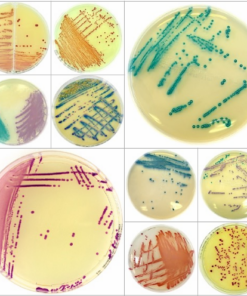
Water Detect Coliforms (LFC-610382) — chromogenic and fluorogenic simultaneous detection of total coliforms and E. coli from water. Blue-green color change indicates coliforms. UV fluorescence at 366nm confirms E. coli.
Chromatic EC X-GLUC Agar (LFC-610602) — membrane filtration method for E. coli enumeration in water and foodstuffs. Validated against UNICHIM M.U.1185 and APAT CNR IRSA 7030.
Contact BCST for pricing, availability, and technical documentation.
Water Quality Detection Media in Thailand — Why Microbiological Monitoring Matters
Water quality detection media in Thailand, available through BCST as Liofilchem dehydrated formulations, addresses one of the most fundamental public and industrial health requirements — the microbiological safety of water. Escherichia coli and coliform bacteria are the primary indicators of fecal contamination in water. Their detection signals potential contamination by enteric pathogens and constitutes the foundational parameter of every water safety monitoring program in the world.
Thai food production facilities, beverage manufacturers, aquaculture operations, and water treatment plants run water monitoring programs under both Thai FDA and international regulatory frameworks. Specifically, drinking water standards require absence of total coliforms and E. coli in 100ml samples. Process water in food production requires documented monitoring programs. Furthermore, effluent and wastewater monitoring programs require regular testing for coliform indicators.
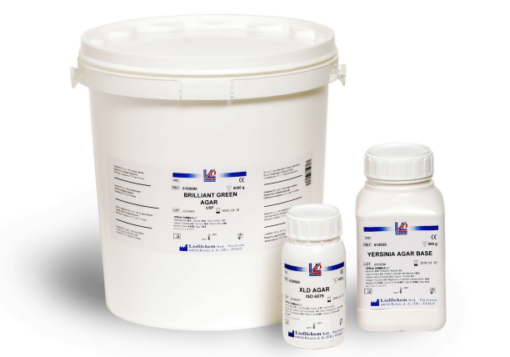
Liofilchem provides two validated chromogenic formulations for water quality coliform and E. coli detection. Both are available through BCST in Thailand as dehydrated media in 500g containers, manufactured to ISO 9001 quality management standards and in accordance with ISO 11133:2014.
LIO-610382 — Water Detect Coliforms
What It Does
Water Detect Coliforms is a chromogenic and fluorogenic medium for the simultaneous detection of total coliforms and Escherichia coli in water samples. A single tube or bottle — prepared directly from the dehydrated powder using the water sample itself — detects both organism groups simultaneously through two independent detection mechanisms. Consequently, no separate media are required for total coliform and E. coli testing — a single preparation covers both.
How It Works
The medium uses two distinct detection substrates operating in parallel. X-GAL is the chromogenic substrate cleaved by β-galactosidase, the enzyme characteristic of all coliform bacteria. A blue-green color change in the broth indicates the presence of coliforms. MUG (4-methylumbelliferyl-β-D-glucuronide) is the fluorogenic substrate cleaved by β-D-glucuronidase, the enzyme highly specific for E. coli. Under long-wavelength UV light at 366nm, a blue fluorescence in a blue-green broth confirms the presence of E. coli.
Additionally, the indole reaction — performed by adding Kovac’s Reagent — provides a third independent confirmation of E. coli. The immediate development of a red-purple coloring at the broth surface is a positive indole reaction, confirming E. coli definitively.
Preparation
Water Detect Coliforms has a uniquely simple preparation method. Use the water sample itself to dissolve the powder — 17.1g per litre of water sample. For pre-weighed tubes (ref. LFC-630600), add 10ml of water directly to the tube. For pre-weighed bottles (ref. LFC-630601), add 100ml of water directly to the bottle. Shake to dissolve completely.
Incubate at 37°C for 18–24 hours. Alternatively, incubate at room temperature (20–25°C) for up to 48 hours.
Specifications — Water Detect Coliforms
| Parameter | Detail |
| Cat. No. | LFC-610382 |
| Format | Dehydrated powder |
| Size | 500g |
| Preparation | Dissolve 17.1g per litre of water sample |
| Incubation | 37°C for 18–24h or 20–25°C for up to 48h |
| Detection — coliforms | Blue-green color change |
| Detection — E. coli | Blue fluorescence under UV 366nm + positive indole reaction |
| pH | 7.0 ± 0.2 at 25°C |
| Shelf life | 2 years |
| Storage | 10–30°C, dry environment, tightly closed original container |
Quality control — Water Detect Coliforms:
| Organism | Growth | Color | Fluorescence |
| E. coli ATCC 25922 | Good | Blue-green | Positive |
| E. aerogenes ATCC 13048 | Good | Blue-green | Negative |
| Salmonella Typhimurium ATCC 14028 | Good | Yellow (no change) | — |
| S. aureus ATCC 25923 | Inhibited | Yellow (no change) | — |
LFC-610602 — Chromatic EC X-GLUC Agar
What It Does
Chromatic EC X-GLUC Agar is a selective and differential chromogenic medium for the detection and enumeration of Escherichia coli in water and foodstuffs by membrane filtration. The medium complies with UNICHIM M.U.1185 and APAT CNR IRSA 7030 — Italian regulatory methods for E. coli enumeration in water. It is also applicable to food sample testing by spread plating, pour plating, or direct streaking.
How It Works
X-Glucuronide (5-bromo-4-chloro-3-indoxyl-β-D-glucuronide) is the chromogenic substrate incorporated into the medium. The β-D-glucuronidase enzyme — characteristic of E. coli — cleaves X-Glucuronide to produce blue or blue-green colonies on the membrane or plate. The medium also incorporates tryptophan to enable the indole test as an additional confirmation step — applying Kovac’s Reagent to a blue-green colony and observing a red color confirms E. coli.
Specifications — Chromatic EC X-GLUC Agar
| Parameter | Detail |
| Cat. No. | LFC-610602 |
| Format | Dehydrated medium |
| Size | 500g |
| Preparation | Suspend 54.0g per litre. Autoclave at 121°C for 15 minutes |
| Water method | Filter 100ml through 0.45µm membrane. Transfer membrane to plate surface |
| Incubation | 44 ± 0.5°C for 18–24 hours |
| E. coli colonies | Blue or blue-green — confirmed positive indole with Kovac's Reagent |
| Note | β-glucuronidase-negative bacteria, including E. coli O157, produce colorless colonies |
| pH | 7.0 ± 0.2 at 25°C |
| Shelf life | 2 years |
| Storage | 10–30°C, dry environment, tightly closed original container |
Choosing Between Water Detect Coliforms and Chromatic EC X-GLUC
| Consideration | LFC-610382 Water Detect Coliforms | LFC-610602 Chromatic EC X-GLUC |
| Detection targets | Total coliforms AND E. coli simultaneously | E. coli specifically |
| Method | Broth — presence/absence or MPN | Membrane filtration — quantitative enumeration |
| Preparation | Water sample used directly | Standard autoclave |
| Best for | Field testing, simple pass/fail water monitoring | Quantitative E. coli enumeration, UNICHIM/APAT compliance |
| UV light required | Yes — for E. coli fluorescence | No |
| Regulatory reference | General water monitoring | UNICHIM M.U.1185, APAT CNR IRSA 7030 |
BCST recommends discussing your specific water monitoring method requirements and applicable regulatory framework before selecting between these two products. Contact BCST for guidance.
Applications in Thailand
Food and Beverage Manufacturing Process Water
Food and beverage manufacturers in Thailand monitoring process water quality under their HACCP programs and ISO 22000 food safety management systems use Liofilchem water quality media for routine coliform and E. coli testing. Furthermore, the simple preparation of Water Detect Coliforms — where the water sample itself dissolves the medium — makes it particularly suited to on-site testing programs at water intake points.
Aquaculture Water Quality Monitoring
Aquaculture operations monitoring pond water, recirculated water, and effluent for coliform indicators use chromogenic water testing media to provide rapid, color-based results that non-specialist operators can interpret without advanced microbiological training.
Water Treatment and Distribution
Water treatment facilities and distribution network monitoring programs use membrane filtration with Chromatic EC X-GLUC Agar for quantitative E. coli enumeration in compliance with regulatory water quality standards.
For food pathogen detection media, visit the Food Pathogen Detection Media Thailand page. For the complete Liofilchem portfolio, visit the Chromogenic Culture Media Thailand hub page.
Frequently Asked Questions
Q: Can Water Detect Coliforms be used for drinking water monitoring?
Yes. The simultaneous detection of total coliforms and E. coli from a single preparation makes Water Detect Coliforms suitable for drinking water monitoring programs where both parameters are required. Contact BCST to confirm the applicable regulatory method for your specific monitoring program.
Q: What UV light wavelength is required for E. coli fluorescence reading?
The MUG fluorescence reaction in Water Detect Coliforms requires long-wavelength UV light at 366nm. Short-wavelength UV light will not produce the MUG fluorescence reaction. UV lamps at 366nm are standard laboratory equipment available from BCST and other laboratory supply companies in Thailand.
Order Liofilchem Water Quality Detection Media in Thailand
Contact BCST for pricing, availability, and technical documentation.
Contact us at sales@bcst.co.th or call +66-92-4289163.
[Enquire Now — Water Quality Detection Media]
| Product | Water Detect Coliforms, Chromatic EC X-GLUC Agar |
|---|
Related products
-

Hydrosense ONE Multi Legionella Industrial Kit
22,561.00 ฿ -
Hydrosense ONE Multi Industrial Kit Refill Pack
19,789.00 ฿ -
Food Production Hygiene Monitoring Media Thailand — Liofilchem Chromatic Agar | BCST
Price range: 14,434.30 ฿ through 27,820.00 ฿Select options This product has multiple variants. The options may be chosen on the product page -
Hydrosense PRO Ultra Legionella Water Test
6,820.00 ฿