
Liofilchem ESC Swab — Environmental Surface Sampling Kit 10 mL (100 Tests)
6,020.00 ฿
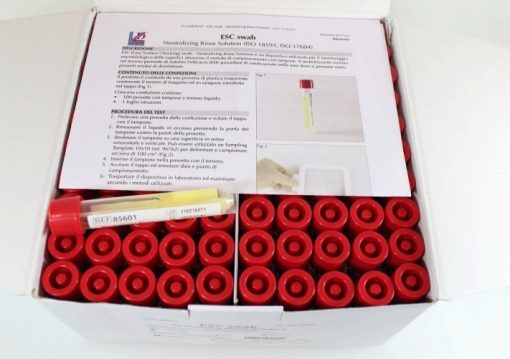
The Liofilchem ESC Swab is a ready-to-use surface swab sampling kit for microbiological monitoring of food contact surfaces, equipment, and environments. Each kit contains a sterile swab pre-loaded into a transparent tube with 10 mL of liquid collection medium — ready to use immediately, no preparation required. Six buffer options cover every surface sampling scenario: clean surfaces, surfaces with residual disinfectants, Listeria-specific monitoring, and enumeration applications. Compliant with ISO 18593 and ISO 17604. 100 tests per box. Storage at 10–25°C. Select your buffer type from the dropdown and add to cart. Available in Thailand from BCST — Biochem Scitech Co., Ltd.
The Liofilchem ESC swab kit reaches Thailand through BCST, giving food microbiology laboratories, food production facilities, and quality assurance teams a ready-to-use, ISO-compliant surface sampling solution in six buffer formulations — each designed for a specific sampling environment and microbiological target.
ESC Swab Kit Thailand — What Liofilchem’s ESC Swab Delivers
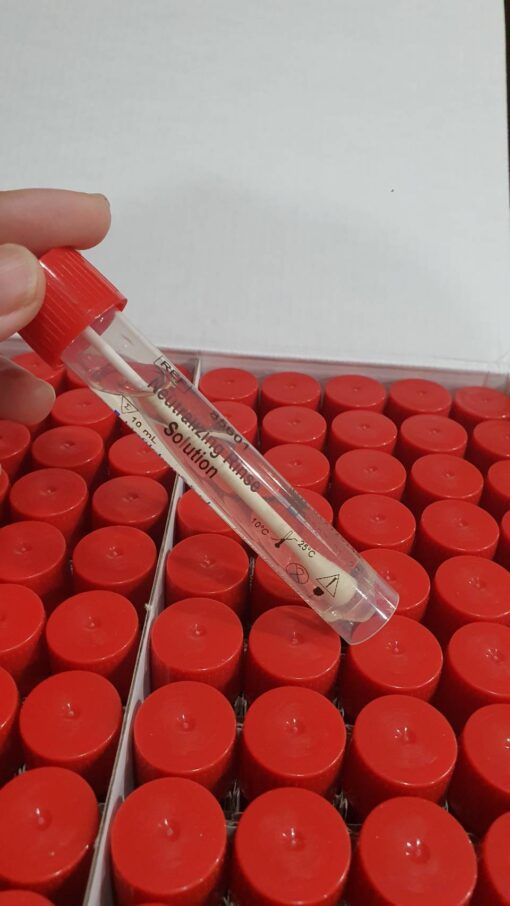
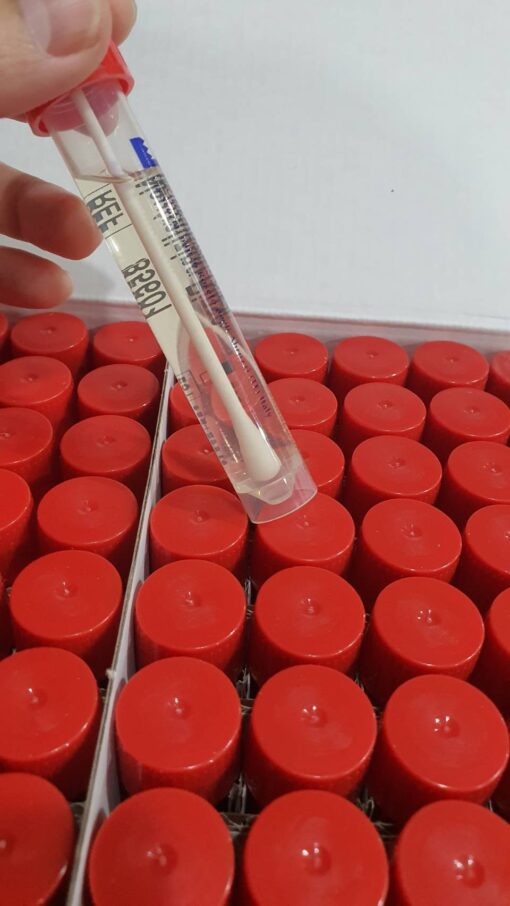
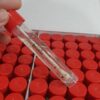
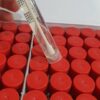
ESC stands for Easy Surface Checking. The Liofilchem ESC Swab is a self-contained surface sampling device. Specifically, each unit consists of a transparent plastic tube pre-filled with 10 mL of sterile liquid collection medium and a sterile swab attached to the cap. In practice, the operator unscrews the cap, uses the swab to sample the surface, returns the swab to the tube, recaps, and transports to the laboratory. No medium preparation, no separate swab handling, and no additional equipment are required in the field.
Furthermore, the entire system is single-use. Therefore, cross-contamination between samples is eliminated by design, not by procedure. Moreover, each box contains 100 individually sealed units — sufficient for an extensive environmental monitoring programme or a full facility audit.
The product complies with ISO 18593:2018 — Microbiology of the food chain: Horizontal method for surface sampling — and ISO 17604:2015 for carcass sampling. Additionally, specific buffer variants comply with ISO 11290, ISO 6579-1, ISO 21528-1, and ISO 6887, depending on the application.
Why Buffer Selection Matters — The Most Important Decision
The collection medium in the tube is not interchangeable. Different surfaces, different sanitization programmes, and different microbiological targets each require a specific buffer formulation. Consequently, selecting the wrong buffer produces results that either underestimate contamination — because the medium fails to recover organisms properly — or provides incorrect baseline data because neutralising agents interfere with the target organism.
How To Choose The Right Buffer For Your Application
The selection guide below is derived directly from the Liofilchem IFUs for each product. Use it to identify the correct variant for your application before ordering.
ESC Swab Buffer Selection Guide
Buffered Peptone Water — Ref. LIO-85603 For surfaces free of residual disinfectants. General pathogen monitoring.
Use this variant when sampling surfaces that have not recently been treated with chemical disinfectants, or where disinfectant residues are not expected to be present. Buffered Peptone Water recovers sub-lethally injured cells from food contact surfaces — making it particularly effective for detecting organisms weakened by heat, cold, or physical stress rather than chemical treatment.
Validated targets: Salmonella spp, Enterobacteriaceae, Listeria spp. Standard compliance: ISO 6579-1, ISO 21528-1, ISO 11290. QC strains: S. Typhimurium WDCM 00031, S. Enteritidis WDCM 00030, E. coli WDCM 00012, L. monocytogenes 4b WDCM 00021.
Do not use on surfaces where residual disinfectants are present — instead use Neutralizing Rinse Solution (85601), D/E Neutralizing Broth (LFC-85605), or Letheen Broth (LFC-85607).
D/E Neutralizing Broth — Ref. LIO-85605 For surfaces with residual disinfectants. Broadest neutralising spectrum available.
Use this variant when sampling surfaces recently sanitized with any of the following: quaternary ammonium compounds, phenolics, iodine, chlorine preparations, mercurials, formaldehyde, or glutaraldehyde. D/E Neutralizing Broth inactivates higher concentrations of residual antimicrobials than other standard neutralising formulations — making it the most robust choice for heavily sanitised production environments.
The medium contains a pH indicator — bromocresol purple — which turns yellow in the presence of acid produced by bacterial fermentation. This provides a visual confirmation of bacterial activity in the tube before laboratory analysis.
QC strains: E. coli ATCC® 25922, S. aureus ATCC® 6538, S. Typhimurium ATCC® 14028, B. subtilis ATCC® 6633, P. aeruginosa ATCC® 27853.
Demi Fraser Broth — Ref. LIO-85614 Listeria-specific. Suitable for surfaces with or without residual disinfectants.
Use this variant when the specific target is Listeria monocytogenes or Listeria spp, in compliance with ISO 11290-1 (detection) and ISO 11290-2 (enumeration). Demi Fraser Broth — also known as Half Fraser Broth — is a selective and differential enrichment medium. All Listeria species hydrolyse esculin, which reacts with ferric ions in the medium to produce visible blackening. This blackening signals the presence of Listeria before laboratory confirmation.
Selectivity against competing organisms comes from lithium chloride, nalidixic acid, and acriflavine. Neutralising agents — histidine, lecithin, polysorbate 80, and sodium thiosulfate — make this medium suitable for use even in areas where residual disinfectants are present.
This is the only variant in the ESC Swab range currently available exclusively in the 10 mL format.
QC strains: L. monocytogenes serovar 4b WDCM 00021, E. coli WDCM 00013, E. faecalis WDCM 00009.
Letheen Broth — Ref. LIO-85607 For surfaces treated with quaternary ammonium or phenolic disinfectants.
Use this variant for surfaces sanitised with quaternary ammonium compounds or phenolic disinfectants including hexachlorophene. Letheen Broth neutralises these specific disinfectant classes through lecithin (effective against QAC) and polysorbate 80 (effective against phenolics). Additionally, the AOAC recommends Letheen Broth for determining the phenol coefficient of cationic surfactants — a standard method for evaluating sanitiser efficacy.
Use D/E Neutralizing Broth instead when the disinfectant programme includes chlorine, iodine, formaldehyde, glutaraldehyde, or mercurial compounds — the broader neutralising spectrum of D/E covers all of these.
QC strains: E. coli ATCC® 25922, S. aureus ATCC® 6538, S. Typhimurium ATCC® 14028.
Maximum Recovery Diluent — Ref. LIO-85609 For surfaces free of residual disinfectants. Enumeration applications.
Use this variant when the objective is microbial enumeration — counting viable organisms recovered from a surface — rather than detection of a specific pathogen. Maximum Recovery Diluent, also called Peptone Salt Solution, combines peptone and physiological saline to maximise recovery of stressed or injured cells without promoting bacterial multiplication. As a result, bacterial density at the time of sampling is preserved through transport to the laboratory, giving accurate count data rather than inflated post-transport numbers.
The medium complies with ISO 6887 for microbiological examination of food and animal feed.
Do not use on surfaces where residual disinfectants may be present — use a neutralising formulation instead.
QC strains: E. coli WDCM 00012, S. aureus WDCM 00034.
Neutralizing Rinse Solution — Ref. LIO-85601 For surfaces with residual disinfectants. General neutralising collection medium.
Use this variant as a general-purpose neutralising rinse solution for surface sampling in areas where residual disinfectants are present. Liofilchem certifies this product as non-hazardous under GHS regulation and European CLP Regulation 1272/2008 — no Safety Data Sheet is required or provided.
Sampling Procedure — All Variants
Importantly, the six-step procedure applies to all ESC Swab variants:
Step 1 — Remove one tube from the box. Unscrew the cap with its attached swab.
Step 2 — Press the swab tip gently against the inner wall of the tube to remove excess medium.
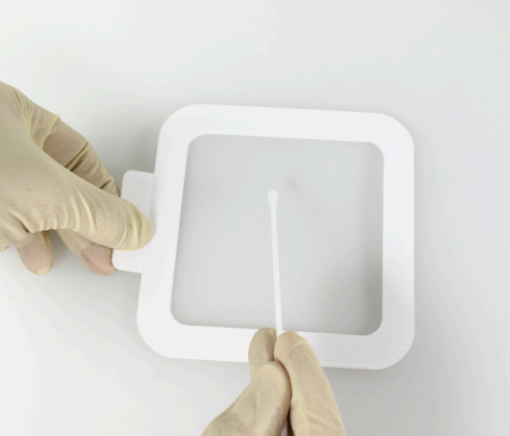
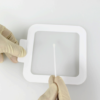
Step 3 — Swab the target surface horizontally and then vertically while rotating the swab. For standardised results, a Sampling Template 10×10 (Ref. LIO-96762) can be used to delimit 100 cm² precisely.
Step 4 — Return the swab to the tube.
Step 5 — Screw the cap closed. Record the date, time, and sampling point on the tube label.
Step 6 — Transport to the laboratory. For the Buffered Peptone Water variant, pre-enrichment incubation can be performed directly in the tube, eliminating the need for sample transfer before enrichment.
Product Specification
| Specification | Detail |
| Volume per tube | 10 mL |
| Tests per box | 100 |
| Storage temperature | 10-20°C |
| Standards | ISO 18593:2018, ISO 17604:2015 |
| Safety classification | Non-hazardous (all variants) |
| Format | Ready-to-use — no preparation required |
| Brand | Liofilchem |
| Supplier | BCST | Biochem Scitech Co., Ltd. |
Safety Classification
All ESC Swab variants are classified as non-hazardous under GHS regulation and applicable European chemical safety legislation. Liofilchem certifies that no variant contains hazardous substances in concentrations exceeding current legislative limits. No Safety Data Sheet is required for any variant in this range. Consequently, import, storage, and use require no special chemical hazard documentation.
Who Uses The ESC Swab Kit In Thailand
The Liofilchem ESC swab kit serves every tier of Thailand’s food safety and microbiology sector.
- Food manufacturing facilities conducting environmental monitoring programmes under HACCP or GMP requirements
- Food microbiology laboratories performing routine surface sampling for pathogen detection and microbial counts
- Quality assurance teams auditing food contact surfaces, equipment, drains, walls, and air handling units
- Meat and poultry processing operations requiring carcass surface sampling under ISO 17604
- Institutions and research facilities performing food chain environmental monitoring
- Any facility where surface hygiene is a documented legal or commercial obligation
Important Note
The ESC Swab is intended for use by trained microbiological personnel only. Results require interpretation within your facility’s environmental monitoring programme and should not replace regulatory microbiological testing or food safety certification processes. Each variant is formulated for specific sampling conditions — use the buffer selection guide above before ordering.
Available in Thailand exclusively through BCST — Biochem Scitech Co., Ltd. Select your buffer from the dropdown above and contact BCST for volume pricing and technical support.
| Buffer | Buffered Peptone Water 10 mL, D/E Neutralizing Broth 10 mL, Demi Fraser Broth 10 mL, Letheen Broth 10 mL, Maximum Recovery Diluent 10 mL, Neutralizing Rinse Solution 10 mL |
|---|