5,930.00 ฿–7,910.00 ฿Price range: 5,930.00 ฿ through 7,910.00 ฿
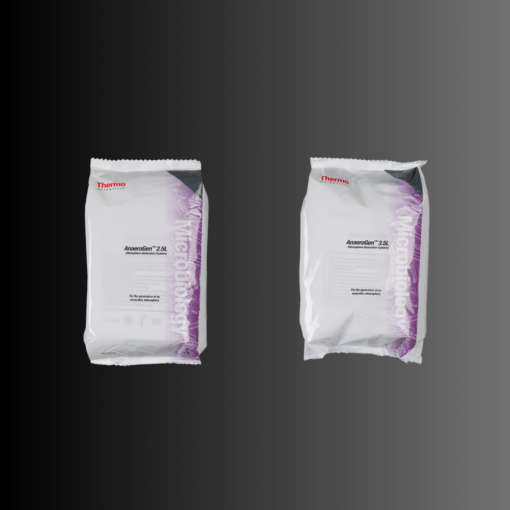
Oxoid AnaeroGen, available in Thailand through BCST, generates optimal anaerobic atmospheric conditions for the culture of anaerobic microorganisms — without hydrogen, without a catalyst, and without the addition of water. Open the foil sachet, place it in a sealed jar or box, and oxygen drops below 1% within 30 minutes.
Three products. One complete anaerobic incubation system.
OXD-AN0025A — Oxoid AnaeroGen 2.5L Sachet, 10 sachets per pack. For use with 2.5L anaerobic jars and boxes.
OXD-AN0035A — Oxoid AnaeroGen 3.5L Sachet, 10 sachets per pack. For use with 3.5L anaerobic jars.
OXD-BR0055B — Oxoid Resazurin Anaerobic Indicator. Cotton strip impregnated with resazurin. Visual confirmation that anaerobic conditions have been achieved and maintained inside your jar.
Select your required product. Contact BCST for pricing, availability, and technical documentation.
Oxoid AnaeroGen, available in Thailand through BCST, is the professional standard for anaerobic atmosphere generation in clinical microbiology, food safety testing, veterinary diagnostics, and research laboratories. Anaerobic bacteria are among the most clinically and microbiologically significant pathogens encountered across these disciplines. Organisms including Clostridium perfringens, Bacteroides fragilis, Fusobacterium necrophorum, and Fusobacterium nucleatum cause infections ranging from local abscesses to life-threatening systemic disease. Fusobacterium necrophorum bacteremia carries a reported mortality rate of 10%. Recovering these organisms from clinical or food samples requires one essential prerequisite: a sealed environment with oxygen removed rapidly, reliably, and completely.
Oxoid AnaeroGen delivers precisely that environment. Moreover, it does so without hydrogen gas generation, without the need for a catalyst, and without adding water — making it the safest, simplest, and most reproducible anaerobic gas generation system available for professional laboratory use.
BCST distributes three products in the Oxoid AnaeroGen system in Thailand. Together, they form a complete anaerobic incubation solution: the 2.5L sachet for standard jar and box formats, the 3.5L sachet for larger jar formats, and the Resazurin Anaerobic Indicator for visual confirmation that anaerobic conditions have been achieved and maintained throughout incubation. For validated food and water sample testing, environmental monitoring, and clinical microbiology, this system meets the demands of the most rigorous laboratory quality frameworks.
The Science — How Oxoid AnaeroGen Works
Principle of Atmospheric Generation
The Oxoid AnaeroGen system consists of a paper gas-generating sachet supplied inside a sealed foil pouch. The paper sachet contains ascorbic acid and activated carbon. When exposed to air, these components react immediately — the ascorbic acid and activated carbon rapidly adsorb oxygen and produce carbon dioxide in its place.
Specifically, when the paper sachet is placed in a sealed anaerobic jar or box within one minute of opening the foil pouch, the reaction generates the atmospheric conditions that anaerobic growth requires. Moreover, the system produces no hydrogen gas and therefore requires no palladium catalyst — eliminating an entire category of safety risk associated with older hydrogen-based anaerobic generation methods.
Atmospheric Performance
Performance specifications, confirmed by in-process quality control and third-party supplier testing, are as follows. The sachet reduces oxygen to 0.1% or below within 2.5 hours. Specifically, a properly sealed container reaches below 1% oxygen within 30 minutes of sachet activation — a critical threshold for anaerobic growth. Additionally, the resulting carbon dioxide content reaches between 8% and 14% after 24 hours, with the precise level depending on the number of culture plates placed inside the container.
Why Hydrogen-Free Matters
Conventional anaerobic generation systems that produce hydrogen gas require a palladium catalyst to drive the reaction between hydrogen and residual oxygen. The laboratory must activate, maintain, and periodically replace that catalyst. Hydrogen generation also creates an explosion risk when the catalyst fails or the container seal breaks. By contrast, the Oxoid AnaeroGen system generates no hydrogen at any stage. As a result, no catalyst is required, no activation step is needed, and the safety profile is substantially superior — particularly relevant for laboratories operating under strict biosafety and chemical hazard frameworks.
The Three Products — Specifications and Usage
OXD-AN0025A — Oxoid AnaeroGen 2.5L Sachet
Parameter
Detail
BCST Cat. No.
OXD-AN0025A
Thermo Fisher Cat. No.
AN0025A
Brand
Oxoid (Thermo Fisher Scientific)
Product
AnaeroGen 2.5L Sachet
Pack size
10 sachets per pack
Intended container
2.5L anaerobic jar (AG0025A) or 2.5L AnaeroBox (AB0025A) — sold separately
Oxygen reduction
Below 1% within 30 minutes
Oxygen removal spec
0.1% or below within 2.5 hours
CO₂ production
8–14% after 24 hours
Hydrogen generation
None
Catalyst required
No
Water addition required
No
Intended use
In vitro diagnostic — professional use only
Compatible food/water testing
Yes
Storage
2–25°C ± 2°C
Use by
As stated on label
Manufacturer
Oxoid Ltd, Basingstoke, UK (Thermo Fisher Scientific)
OXD-AN0035A — Oxoid AnaeroGen 3.5L Sachet
Parameter
Detail
BCST Cat. No.
OXD-AN0035A
Thermo Fisher Cat. No.
AN0035A
Brand
Oxoid (Thermo Fisher Scientific)
Product
AnaeroGen 3.5L Sachet
Pack size
10 sachets per pack
Intended container
3.5L anaerobic jar — sold separately
Oxygen reduction
Below 1% within 30 minutes
Oxygen removal spec
0.1% or below within 2.5 hours
CO₂ production
8–14% after 24 hours
Hydrogen generation
None
Catalyst required
No
Water addition required
No
Intended use
In vitro diagnostic — professional use only
Compatible food/water testing
Yes
Storage
2–25°C ± 2°C
Use by
As stated on label
Manufacturer
Oxoid Ltd, Basingstoke, UK (Thermo Fisher Scientific)
OXD-BR0055B — Oxoid Resazurin Anaerobic Indicator
Parameter
Detail
BCST Cat. No.
OXD-BR0055B
Thermo Fisher Cat. No.
BR0055B
Brand
Oxoid (Thermo Fisher Scientific)
Product
Resazurin Anaerobic Indicator
Description
Cotton strip impregnated with resazurin — a redox indicator dye
Function
Visual confirmation that anaerobic conditions have been achieved and maintained
Color change
Pink (aerobic) → White/colorless (anaerobic)
Physical state
Solid strip
Hazard classification
Non-hazardous — CLP Regulation EC No 1272/2008 classification criteria not met
Storage
2–8°C
Manufacturer
Oxoid Ltd, Basingstoke, UK (Thermo Fisher Scientific)
Recommended use
Place inside anaerobic jar or box with AnaeroGen sachet to confirm atmospheric conditions
Complete Your Anaerobic System — OXD-AG0025A AnaeroJar 2.5L
The OXD-AN0025A sachet requires a compatible sealed container to function. Oxoid AnaeroJar 2.5L (OXD-AG0025A) is the purpose-designed polycarbonate jar for use with the AnaeroGen 2.5L sachet — and BCST can source it in Thailand through our distribution network.
The AnaeroJar 2.5L provides a polycarbonate jar base and lid secured by four self-venting clips. Its transparent construction allows visual inspection of culture plates and indicator strips without opening the container — an important operational advantage when checking the Resazurin Indicator before committing to opening the jar and breaking the anaerobic seal.
Laboratories that already own a compatible 2.5L anaerobic container may use their existing equipment. For laboratories setting up a new anaerobic workflow, or replacing damaged containers, BCST recommends OXD-AG0025A as the validated companion container for OXD-AN0025A sachets. Contact BCST to confirm current availability and pricing for OXD-AG0025A. For full product details, visit the Oxoid AnaeroJar 2.5L product page.
How to Use Oxoid AnaeroGen — Step-by-Step Procedure
The following procedure applies to both OXD-AN0025A and OXD-AN0035A, used with their respective jar or box formats.
Step 1 — Prepare inoculated media. Place inoculated media plates or identification panels inside the anaerobic jar or box. Use vented disposable plastic Petri dishes to aid gas transfer between the interior and exterior of the plates.
Step 2 — Open the foil sachet. Tear open the AnaeroGen foil sachet at the tear-nick indicated. Remove the AnaeroGen paper sachet from within.
Step 3 — Place indicator (recommended). If using OXD-BR0055B, place the Resazurin Anaerobic Indicator strip inside the jar alongside the culture media, positioned so it is visible through the jar wall. Note the initial color — pink confirms aerobic conditions at the start of the run.
Activating the Sachet and Sealing the Container
Step 4 — Activate the sachet immediately. Place the AnaeroGen paper sachet directly into the jar or box. Note that the paper sachet becomes warm to the touch upon exposure to air — this is expected and confirms the reaction has started. Therefore, seal the jar or box immediately. The time between opening the foil sachet and sealing the container must not exceed one minute. Extended exposure causes loss of reactivity and full anaerobic conditions may not be achieved.
Step 5 — Incubate. Incubate at 37°C ± 2°C for 24–48 hours under anaerobic conditions, or as required by your specific protocol.
Step 6 — Check the indicator before opening. If OXD-BR0055B is in use, observe the indicator through the jar wall before opening. A colorless or white strip confirms anaerobic conditions were maintained throughout incubation. A pink strip indicates a system failure — the run must be repeated with a fresh sachet and the cause of failure investigated before results from that run are interpreted.
Examining Results and Disposal
Step 7 — Examine plates. After incubation, remove plates or identification panels and examine for the presence of colonies or biochemical reactions.
Step 8 — Re-incubation. If re-incubation is required, a fresh AnaeroGen sachet must be used. Under no circumstances should an exhausted sachet be reused — it will not restore anaerobic conditions.
Step 9 — Disposal. Sterilize and discard the exhausted AnaeroGen paper sachet with non-hazardous laboratory waste in accordance with local regulations.
Quality Control
Reference Strains for Performance Verification
Control type
Organism
ATCC strain
Expected result
Positive control
Clostridium novyi
ATCC 9690
Growth
Negative control
Kocuria rhizophila
ATCC 9341
No growth
Incubation conditions for QC testing: 24–48 hours at 37°C ± 2°C, anaerobic.
Quality Control Responsibilities
Each laboratory must perform quality control testing in accordance with local applicable regulations, taking into account the intended use of the product, the frequency of testing, the number of strains used, and incubation conditions. Accordingly, Oxoid recommends using OXD-BR0055B Resazurin Anaerobic Indicator in every run as a routine visual check that anaerobic conditions have been achieved and maintained before results are interpreted.
Warnings and Precautions
These products are for in vitro diagnostic use only and for professional use only. Inspect packaging before first use. Do not use if visible damage to packaging is present, if the product is beyond its stated expiry date, if signs of contamination are present, or if signs of deterioration are evident.
As soon as the AnaeroGen paper sachet is exposed to air, the reaction starts. Seal the container within one minute of opening the foil sachet — this is a procedural requirement, not a guideline. The reaction of ascorbic acid with oxygen is exothermic. Consequently, the AnaeroGen paper sachet may reach up to 65°C during the reaction — this is normal and does not indicate product failure.
Each laboratory must manage waste in accordance with applicable federal, state, and local regulations. Treat or dispose of used sachets, plastic pouches, and contaminated disposable material following procedures for infectious or potentially infectious products.
For full safety information, refer to the Safety Data Sheet available from BCST on request or directly from Thermo Fisher Scientific.
Regulatory and Documentation Status
Oxoid AnaeroGen sachets (OXD-AN0025A and OXD-AN0035A) are classified as in vitro diagnostic devices for professional use. The Resazurin Anaerobic Indicator (OXD-BR0055B) is classified as a laboratory chemical — non-hazardous per CLP Regulation (EC) No 1272/2008. Neither the sachets nor the indicator meet the classification criteria for health, physical, or environmental hazards under current EU regulatory frameworks.
BCST provides Certificates of Analysis, Safety Data Sheets, and the full IFU for all three products on request. Additionally, Thermo Fisher Scientific maintains current Oxoid product documentation at thermofisher.com.
Why the Resazurin Indicator Belongs in Every Run
The Oxoid Resazurin Anaerobic Indicator is not optional equipment for a laboratory that takes anaerobic microbiology seriously. It is the only way to know — before opening the jar — whether the atmospheric conditions required were actually achieved and maintained throughout incubation.
The Problem Without an Indicator
Consider the alternative. A laboratory incubates for 48 hours, opens the jar, and finds no growth. Without an indicator, the laboratory cannot determine whether the organism failed to grow because it was absent, because the medium was unsuitable, or because the jar never reached anaerobic conditions and the organism died before it could grow. That ambiguity costs time, materials, and in clinical settings, patient outcomes.
What the Indicator Provides
With OXD-BR0055B in the jar, a colorless strip at the end of incubation confirms the conditions were correct. No growth under confirmed anaerobic conditions is a meaningful, interpretable result. Growth under confirmed anaerobic conditions is equally meaningful. Every result becomes defensible. That is the standard a professional laboratory operates to — and that is precisely why BCST recommends OXD-BR0055B as a routine companion to every AnaeroGen run.
Applications
Clinical microbiology laboratories use these products to culture obligate anaerobes from wound specimens, blood cultures, tissue biopsies, and abscess material. Food safety testing of water and food samples for anaerobic pathogens including Clostridium species is another primary application. Research and reference laboratories, furthermore, depend on the reproducible atmospheric conditions these sachets provide for method development and organism characterization. Veterinary diagnostic laboratories also rely on Oxoid AnaeroGen for anaerobic culture from animal clinical specimens across species.
In addition, for laboratories conducting food safety residue screening alongside microbiological testing, BCST distributes Oxoid AnaeroGen sachets and Resazurin Indicator as part of a broader portfolio of validated food safety and microbiology products — including Randox ELISA kits for aflatoxin, beta-agonist, ractopamine, and antibiotic residue detection.
Frequently Asked Questions
Q: What is the difference between the 2.5L and 3.5L sachets?
In brief, the sachets differ in size and in the volume of the container each is designed for. OXD-AN0025A (2.5L) is intended for use with the AnaeroJar 2.5L jar (OXD-AG0025A) or AnaeroBox 2.5L box. OXD-AN0035A (3.5L) is intended for use with the 3.5L anaerobic jar. Both sachets operate on the same chemical principle and achieve the same atmospheric performance specifications. Select your sachet size based on the jar or box format your laboratory uses.
Q: Do I need to add water to activate the sachet?
In short, no. The Oxoid AnaeroGen system requires no addition of water. Simply open the foil pouch, remove the paper sachet, place it in your sealed container within one minute, and the reaction activates automatically on contact with air. This is one of the principal operational advantages over older anaerobic generation systems.
Q: Is the reaction safe? The sachet gets warm.
Yes. The reaction of ascorbic acid with oxygen is exothermic, and the paper sachet becomes warm — up to 65°C — during activation. This is a normal, expected part of the reaction and does not indicate a problem. Handle the sachet with standard laboratory precautions.
Q: What happens if I take more than one minute to seal the container after opening the foil sachet?
Extended exposure to the open air depletes the reactivity of the ascorbic acid and activated carbon before the sachet is sealed. As a result, full anaerobic conditions may not be achieved in the jar. This is one of the most common causes of failed anaerobic runs. The one-minute sealing window is a procedural requirement — treat it accordingly.
Q: Can I reuse a sachet after incubation?
Under no circumstances should a sachet be reused after incubation. Each AnaeroGen sachet is a single-use device. After one incubation run, the reactants are fully exhausted. If re-incubation is required, a fresh sachet must be used. Attempting to reuse an exhausted sachet results in failure to achieve anaerobic conditions.
Q: How does the Resazurin Indicator work?
Resazurin is a redox-sensitive dye. In the presence of oxygen, it remains pink. Under anaerobic conditions, reduction converts it to a colorless or white form. OXD-BR0055B consists of a cotton strip impregnated with resazurin. When placed in the sealed jar alongside the AnaeroGen sachet, it provides a continuous visual record of atmospheric conditions inside the container. A colorless strip at the end of incubation confirms that anaerobic conditions were achieved and maintained. A pink strip indicates a system failure that requires investigation before any results from that run are interpreted.
Q: Do the jars and boxes come with the sachets?
No. The AnaeroJar 2.5L (OXD-AG0025A) is sold separately from the sachets. BCST stocks the OXD-AG0025A AnaeroJar 2.5L in Thailand. Contact BCST to order the jar alongside your sachets and indicator. For full details, visit the Oxoid AnaeroJar 2.5L product page.
Q: Are these products suitable for food and water sample testing?
Yes — additionally, the IFU for AnaeroGen (MBD_BT_IFU-0643) explicitly confirms that these products can be used for testing food and water samples, in addition to their primary clinical diagnostic applications.
Q: What documentation can BCST provide?
BCST provides Certificates of Analysis, Safety Data Sheets, and the full product IFU for all three products on request. Specify your documentation requirements at the time of enquiry or order.
Order Oxoid AnaeroGen in Thailand
Oxoid AnaeroGen sachets and the Resazurin Anaerobic Indicator are available in Thailand through BCST — Biochem Scitech Co., Ltd. Laboratories across Thailand rely on Oxoid AnaeroGen for reproducible, validated anaerobic culture conditions that meet the demands of clinical, food safety, and research applications. Contact BCST for current pricing, stock availability, and lead times.
Reach BCST via the contact form on this page, by email at sales@bcst.co.th, or by phone at +66-92-4289163. Provide your required BCST catalogue number, quantity, and delivery location and BCST will respond with availability confirmation and a formal quotation.
For the complete BCST microbiology and food safety product portfolio, visit the BCST product catalogue.