
Food Pathogen Detection Media Thailand — Liofilchem Chromatic Agar | BCST
Price range: 14,434.30 ฿ through 28,783.00 ฿
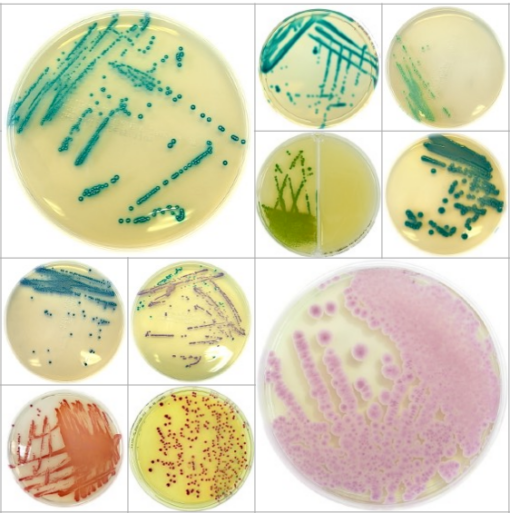
Liofilchem Chromatic Agar food pathogen detection media, available in Thailand through BCST, gives food safety laboratories the ability to detect and presumptively identify major food pathogens directly from colony color on the primary isolation plate. Eight formulations cover the most critical food safety organisms in Thai food production — Salmonella, E. coli, E. coli O157, Vibrio spp., Cronobacter spp., Bacillus cereus, and total coliforms.
All products are available as dehydrated media in 500g containers. Each container produces multiple liters of prepared medium. Shelf life is two years from manufacture.
Select your target organism above. Contact BCST for pricing, availability, and technical documentation.
Food Pathogen Detection Media in Thailand — Color-Based Identification That Accelerates Every Result
Food pathogen detection media in Thailand, available through BCST as Liofilchem Chromatic Agar dehydrated formulations, brings chromogenic identification technology to every food safety laboratory in the country — regardless of size or throughput. The principle is elegantly simple. Target organisms produce specific enzymes that cleave chromogenic substrates incorporated into the agar. The enzymatic reaction produces a characteristic colony color. Consequently, the laboratory reads the identity of the organism directly from the plate after a single incubation step.
This eliminates — or substantially reduces — the need for secondary confirmatory tests on primary isolation colonies. For laboratories running food safety testing programs under HACCP, ISO 22000, or Thai FDA requirements, this means faster sample turnaround, reduced reagent consumption, and a cleaner, more auditable workflow from sample receipt to final result.
All Liofilchem Chromatic Agar products available through BCST are dehydrated media in 500g containers. They are manufactured by Liofilchem S.r.l., Italy, to ISO 9001 quality management standards and in accordance with ISO 11133:2014.
Complete Product Specifications
LFC-610612 — Chromatic Detection
| Parameter | Detail |
| Cat. No. | LFC-610612 |
| Product | Chromatic Detection |
| Format | Dehydrated medium |
| Size | 500g |
| Type | Non-selective chromogenic medium |
| Intended use | Enumeration and presumptive identification of microorganisms from clinical and non-clinical specimens |
| Preparation | Suspend 56.1g per litre of distilled water. Autoclave at 121°C for 15 minutes |
| Incubation | 35 ± 2°C for 18–24 hours |
| pH | 7.2 ± 0.2 at 25°C |
| Dehydrated medium appearance | Free-flowing, homogeneous, beige |
| Prepared medium appearance | Slightly opalescent, amber |
| Shelf life — dehydrated | 2 years |
| Storage | 10–30°C, dry environment, tightly closed original container |
Colony identification — Chromatic Detection:
| Microorganism | Typical Colony Color |
| Escherichia coli | Pink-reddish-mauve |
| Klebsiella spp., Enterobacter spp., Serratia spp. | Green-blue |
| Proteus spp. | Brown |
| Pseudomonas spp. | Yellowish-green |
| Staphylococcus aureus | Cream |
| Enterococcus faecalis | Green-turquoise |
| Staphylococcus saprophyticus | Light pink |
LFC-610611 — Chromatic Salmonella
| Parameter | Detail |
| Cat. No. | LFC-610611 |
| Product | Chromatic Salmonella |
| Format | Dehydrated base medium |
| Size | 500g |
| Type | Chromogenic selective medium |
| Intended use | Detection and presumptive identification of Salmonella spp. from food, environmental, and clinical specimens |
| ISO standard compliance | EN ISO 6579-1 — usable as second isolation agar in the four-step Salmonella detection procedure |
| Preparation | Suspend 34.7g per litre. Add 3ml Tween 20 Supplement. Autoclave at 100°C for 5 minutes. Optionally add Chromatic Salmonella Selective Supplement after cooling to 45–50°C |
| Supplements required | Tween 20 Supplement (included); Chromatic Salmonella Selective Supplement (optional, inhibits Proteus, Pseudomonas, Aeromonas) |
| Incubation | 37 ± 1°C for 18–24 hours (food/environmental); 41.5°C for 18–24 hours per EN ISO 6579-1 |
| pH | 7.5 ± 0.2 at 25°C |
| Shelf life — dehydrated | 2 years |
| Storage | 10–30°C, dry environment, tightly closed original container |
Colony identification — Chromatic Salmonella: Salmonella spp. produce mauve-magenta colonies. Competing organisms produce green, blue, colorless, or colorless with a black center.
LFC-610610 — Chromatic Coli Coliform
| Parameter | Detail |
| Cat. No. | LFC-610610 |
| Product | Chromatic Coli Coliform |
| Format | Dehydrated medium |
| Size | 500g |
| Type | Chromogenic selective medium |
| Intended use | Detection and enumeration of β-glucuronidase-positive E. coli and coliform bacteria in food and water |
| Preparation | Suspend 39.7g per litre. DO NOT AUTOCLAVE. Heat to boil only |
| Incubation options | 35 ± 2°C for 18–24h (standard); 44 ± 1°C for 24 ± 2h (fecal coliforms); 30 ± 1°C for 24–48h (total coliforms) |
| pH | 7.2 ± 0.2 at 25°C |
| Shelf life — dehydrated | 2 years |
| Storage | 10–30°C, dry environment, tightly closed original container |
Colony identification — Chromatic Coli Coliform:
| Microorganism | Typical Colony Color |
| E. coli (β-glucuronidase positive) | Green |
| Other coliform bacteria | Mauve |
| Other bacteria (if not inhibited) | Colorless |
LFC-610602 — Chromatic EC X-GLUC Agar
| Parameter | Detail |
| Cat. No. | LFC-610602 |
| Product | Chromatic EC X-GLUC Agar |
| Format | Dehydrated medium |
| Size | 500g |
| Type | Selective and differential chromogenic medium |
| Intended use | Detection and enumeration of E. coli in water and foodstuffs |
| Standard compliance | UNICHIM M.U.1185, APAT CNR IRSA 7030 |
| Preparation | Suspend 54.0g per litre. Autoclave at 121°C for 15 minutes |
| Application — water | Membrane filtration of 100ml water sample through 0.45µm filter, transfer membrane to plate |
| Incubation | 44 ± 0.5°C for 18–24 hours |
| Chromogenic substrate | X-Glucuronide — cleaved by β-D-glucuronidase enzyme of E. coli |
| Indole confirmation | Kovac's Reagent applied to blue/blue-green colonies — red color = E. coli confirmed |
| pH | 7.0 ± 0.2 at 25°C |
| Shelf life — dehydrated | 2 years |
| Storage | 10–30°C, dry environment, tightly closed original container |
Colony identification — Chromatic EC X-GLUC: E. coli (β-glucuronidase positive) produce blue or blue-green colonies confirmed by positive indole reaction. β-glucuronidase-negative bacteria, including E. coli O157, produce colorless colonies.
LFC-610614 — Chromatic E.coli O157
| Parameter | Detail |
| Cat. No. | LFC-610614 |
| Product | Chromatic E.coli O157 |
| Format | Dehydrated medium |
| Size | 500g |
| Type | Chromogenic selective medium |
| Intended use | Isolation and differentiation of Escherichia coli O157 in food and clinical samples |
| Preparation | Suspend 49g per litre. DO NOT AUTOCLAVE. Heat to boil only. Cool to 45–50°C before pouring |
| Incubation | 37°C for 18–24 hours |
| pH | 7.0 ± 0.2 at 25°C |
| Confirmation required | Immunoserological tests for final E. coli O157 confirmation |
| Shelf life — dehydrated | 2 years |
| Storage | 10–30°C, dry environment, tightly closed original container |
Colony identification — Chromatic E.coli O157: E. coli O157 produces mauve or mauve-purple colonies. Gram-positive organisms are completely inhibited. Other Gram-negative organisms produce colorless, blue, green, or blue-green colonies. Some Salmonella spp. may produce false positives — immunoserological confirmation is required.
LIO-610390 — Chromatic Cronobacter Isolation Agar
| Parameter | Detail |
| Cat. No. | LFC-610390 |
| Product | Chromatic Cronobacter Isolation Agar (CCI) |
| Format | Dehydrated medium |
| Size | 500g |
| Type | Chromogenic selective medium |
| Intended use | Isolation of Cronobacter spp. (formerly Enterobacter sakazakii) from food, animal feed, and food production environmental samples |
| ISO standard compliance | ISO 22964:2017 — used as the selective plating medium in conjunction with Cronobacter Selective Broth (CSB) |
| Preparation | Suspend 32.4g per litre. Autoclave at 121°C for 15 minutes. Cool to 45–50°C before pouring |
| Workflow | Pre-enrichment in BPW (ref. 414030) → enrichment in CSB (ref. 24483) → plating on CCI |
| Enrichment incubation | 36 ± 2°C for 18 ± 2h (BPW); 41.5°C for 24 ± 2h (CSB) |
| Plating incubation | 41.5°C for 24 ± 2h |
| pH | 7.3 ± 0.2 at 25°C |
| Shelf life — dehydrated | 2 years |
| Storage | 10–30°C, dry environment, tightly closed original container |
Colony identification — Chromatic Cronobacter: Cronobacter strains produce blue to blue-green colonies (1–3mm). Other organisms, if not inhibited, produce white, white with green centre, gray, or black colonies.
Why this product matters for Thai food safety: Cronobacter sakazakii is a food safety pathogen of critical significance in powdered infant formula. It is responsible for rare but severe neonatal meningitis and necrotizing enterocolitis with high case fatality rates. ISO 22964:2017 governs its detection in food and animal feed. For Thai dairy processors, infant formula manufacturers, and food production environmental monitoring programs, Chromatic Cronobacter Isolation Agar provides a validated ISO 22964-compliant plating medium for Cronobacter detection workflows.
LFC-610633 — Chromatic Vibrio
| Parameter | Detail |
| Cat. No. | LFC-610633 |
| Product | Chromatic Vibrio |
| Format | Dehydrated medium |
| Size | 500g |
| Type | Chromogenic selective medium |
| Intended use | Selective isolation and cultivation of Vibrio spp. from food, water, and environmental samples |
| Target organisms | V. cholerae, V. parahaemolyticus, V. vulnificus, V. alginolyticus |
| Preparation | Suspend 92.4g per litre. Heat to boil until dissolved. DO NOT AUTOCLAVE |
| Incubation | 35 ± 2°C aerobically for 18–24 hours. Heavy inoculation recommended |
| pH | 8.4 ± 0.2 at 25°C (alkaline pH enhances V. cholerae recovery and inhibits non-vibrio contaminants) |
| Specimen note | Do not freeze specimens for vibrio culture. Use Cary Blair Transport Medium for delayed samples |
| Shelf life — dehydrated | 2 years |
| Storage | 10–30°C, dry environment, tightly closed original container |
Colony identification — Chromatic Vibrio:
| Microorganism | Typical Colony Color |
| Vibrio parahaemolyticus | Mauve |
| Vibrio vulnificus / V. cholerae | Green-blue to turquoise blue |
| Vibrio alginolyticus | Colorless |
| E. coli ATCC 25922 | Inhibited |
| S. aureus ATCC 25923 | Inhibited |
LFC-610628 — Chromatic Bacillus Cereus
| Parameter | Detail |
| Cat. No. | LFC-610628 |
| Product | Chromatic Bacillus Cereus |
| Format | Dehydrated medium |
| Size | 500g |
| Type | Chromogenic selective medium |
| Intended use | Selective isolation and presumptive identification of Bacillus cereus from food samples |
| Shelf life — dehydrated | 2 years |
| Storage | 10–30°C, dry environment, tightly closed original container |
Full preparation and colony identification specifications for LFC-610628 are available in the Liofilchem Technical Sheet. Contact BCST for the complete documentation package.
The Science — Why Chromogenic Media Outperforms Traditional Agar
Traditional selective media like MacConkey, XLD, and Baird-Parker agars rely on inhibition and broad colony morphology to differentiate organisms. This approach has limitations. Specifically, experienced interpretation is needed to distinguish morphologically similar colonies. Additionally, secondary biochemical confirmation tests are routinely required on all suspect colonies — adding a full working day to the identification timeline.
Chromogenic media resolve both limitations simultaneously. First, the enzymatic color reaction is specific to the target organism’s metabolic profile. Second, the color reaction is objective — a green colony on Chromatic Coli Coliform is E. coli; a mauve colony is another coliform. The interpretation requires less expertise and produces a more defensible result in less time.
Furthermore, Liofilchem Chromatic Agar products use ISO 9001-certified manufacturing and validated chromogenic substrate formulations. Consequently, lot-to-lot consistency is assured and performance testing against standard quality control strains is documented in the Certificate of Analysis for every batch.
Applications in Thai Food Safety Laboratories
Food Production Quality Control
Food manufacturers running in-house HACCP monitoring programs use Liofilchem Chromatic Agar for routine environmental swabbing, finished product testing, and raw material screening. Specifically, Chromatic Salmonella and Chromatic Coli Coliform are the most widely deployed media for food safety monitoring in Thai food factories.
Contract and Commercial Food Safety Laboratories
Contract laboratories providing ISO 17025-accredited food safety testing services use chromogenic media for both efficiency and defensibility. Additionally, the documented lot-specific quality control data from Liofilchem supports accreditation body audit requirements.
Export Compliance Testing
Thai food exporters supplying the EU, Japan, South Korea, and other markets with documented microbiological monitoring requirements use Liofilchem Chromatic Agar to generate the colony identification data that export compliance documentation demands.
For the complete Liofilchem chromogenic media portfolio including water quality and hygiene monitoring products, visit the Chromogenic Culture Media Thailand hub page. For the complete BCST product range, visit the BCST homepage.
Frequently Asked Questions
Q: Why dehydrated media rather than ready-to-use plates?
Dehydrated media in 500g containers offers a two-year shelf life compared to four to six months for ready-to-use plates. Moreover, the cost per prepared plate is significantly lower, and the laboratory prepares fresh plates on demand rather than managing short-dated stock. For any laboratory running consistent plate volumes, dehydrated media is the more economical and operationally flexible choice.
Q: Do these products require autoclave facilities?
Most Liofilchem Chromatic Agar formulations require standard laboratory autoclave preparation. However, Chromatic Coli Coliform (LIO-610610), Chromatic Vibrio (LIO-610633), Chromatic E.coli O157 (LIO-610614), and Chromatic Candida (LIO-610613) must NOT be autoclaved — they require heat-to-boil preparation only. Always refer to the specific IFU for each product before preparation. BCST provides the full IFU for every product at the time of order.
Q: What documentation does BCST provide with each product?
BCST provides the full Instructions for Use (IFU), Safety Data Sheet (SDS), and Certificate of Analysis (CoA) for every Liofilchem Chromatic Agar product. Specify your documentation requirements at the time of enquiry.
Q: Can these products be used for ISO 22000 and HACCP documentation?
Yes. Liofilchem Chromatic Agar products are manufactured to ISO 9001 and in accordance with ISO 11133:2014. Chromatic Cronobacter Isolation Agar is specifically validated for use in ISO 22964:2017 workflows. Chromatic Salmonella is applicable as the second isolation agar in the EN ISO 6579-1 four-step procedure. The documented QC testing and CoA for each batch supports the validation records required by ISO 22000 quality management systems.
Order Liofilchem Food Pathogen Detection Media in Thailand
All Liofilchem Chromatic Agar products listed on this page are available in Thailand through BCST — Biochem Scitech Co., Ltd. Contact BCST for pricing, availability, minimum order quantities, and technical documentation.
Contact us at sales@bcst.co.th or call +66-92-4289163.
[Enquire Now — Food Pathogen Detection Media]
| Product | Chromatic Detection, Chromatic Salmonella, Chromatic Coli Coliform, Chromatic EC X-GLUC Agar, Chromatic E.coli O157, Chromatic Cronobacter Isolation Agar, Chromatic Vibrio, Chromatic Bacillus Cereus |
|---|
Related products
-

CDR WineLab for Wine and Must
-
Liofilchem Latex Agglutination Kit — Rapid Culture Confirmation (Select Target)
Price range: 37,695.00 ฿ through 46,200.00 ฿Select options This product has multiple variants. The options may be chosen on the product page -
CDR BeerLab for Beer and Wort
-
High Level Chlorine Test Strips Thailand — Industrial Disinfection and Bleach Monitoring | BCST
Price range: 2,520.00 ฿ through 4,620.00 ฿Select options This product has multiple variants. The options may be chosen on the product page