Food Production Hygiene Monitoring Media Thailand — Liofilchem Chromatic Agar | BCST
14,434.30 ฿–27,820.00 ฿Price range: 14,434.30 ฿ through 27,820.00 ฿
Liofilchem Chromatic Agar food production hygiene monitoring media, available in Thailand through BCST, supports the rapid chromogenic detection of hygiene-indicator organisms in food production environments, food handler screening programs, and food safety quality assurance laboratories. Five formulations cover Staphylococcus aureus, MRSA, Candida spp., Group B Streptococcus, and ESBL-producing organisms — all relevant to food production hygiene surveillance and antimicrobial resistance monitoring programs.
All products are available as dehydrated media in 500g containers. Shelf life is two to four years depending on the formulation. Contact BCST for pricing, availability, and full technical documentation.
Food Production Hygiene Monitoring in Thailand — Why These Organisms Matter in Your Factory
Food production hygiene monitoring media in Thailand, available through BCST as Liofilchem Chromatic Agar dehydrated formulations, addresses a monitoring need that goes beyond finished product testing. Specifically, it targets hygiene-indicator organisms in food production environments, on food contact surfaces, and on food handlers. These organisms do not always appear in finished product results. However, their presence in the production environment signals hygiene failures. Consequently, if left unaddressed, they will eventually contaminate food.
Staphylococcus aureus is both a food pathogen and the primary hygiene indicator for food handler contamination. MRSA represents its antibiotic-resistant form. Candida spp. are yeasts that contaminate food production environments in bakeries, beverage plants, and fermented food facilities. Additionally, ESBL-producing bacteria are an emerging concern in food production environmental monitoring programs. Furthermore, Group B Streptococcus is a hygiene monitoring target in dairy and infant formula production environments where contamination poses specific product safety risks.
Thai food producers running hygiene monitoring programs under HACCP, ISO 22000, or BRC Global Standards need reliable detection tools. Consequently, these products provide the chromogenic capability to screen production environments, surfaces, equipment, and food handler samples efficiently and accurately.
All products are manufactured by Liofilchem S.r.l., Italy, to ISO 9001 quality management standards and in accordance with ISO 11133:2014. Furthermore, BCST distributes these products exclusively for food safety and analytical laboratory applications in Thailand.
Why Chromogenic Media for Hygiene Monitoring
Traditional selective agars for S. aureus — such as Baird-Parker Agar — require 48-hour incubation. Moreover, they require experienced interpretation of colony morphology and egg yolk reactions to confirm typical colonies. This process delays corrective action decisions. In food production environments, every hour of contamination exposure has consequences.
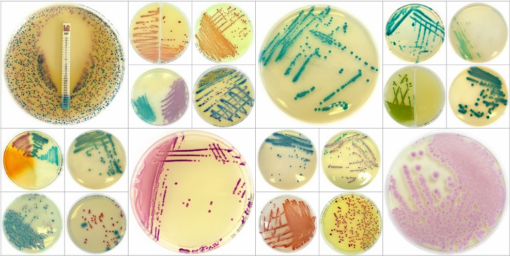
Chromatic Staph aureus identifies S. aureus in 24 hours through a direct chromogenic color reaction. This cuts the identification timeline in half. Similarly, Chromatic MRSA provides chromogenic MRSA detection directly from environmental swabs. It eliminates the multi-step secondary confirmation that traditional methods require. As a result, food factories act on environmental monitoring results faster and with greater confidence.
Complete Product Specifications
LFC-610616 — Chromatic Staph aureus
Parameter
Detail
Cat. No.
LFC-610616
Product
Chromatic Staph aureus
Format
Dehydrated base medium
Size
500g
Type
Chromogenic selective medium
Intended use
Presumptive identification of Staphylococcus aureus from food production environmental samples, food handler hygiene swabs, surface swabs, and food samples
Key advantage over Baird-Parker
Identifies S. aureus in 24 hours versus 48 hours. No egg yolk reaction required
Preparation
Suspend 72.0g per litre of distilled water. Autoclave at 121°C for 15 minutes. Cool to 45–50°C. Aseptically add rehydrated contents of 2 vials of Chromatic Staph aureus Supplement (10ml total) per litre of medium. Mix well and pour into sterile Petri dishes
Supplement required
Chromatic Staph aureus Supplement — contains additional chromogenic substrates and selective agents to optimize colony differentiation and inhibit competing microbiota. Contact BCST to include in order
pH
7.0 ± 0.2 at 25°C
Shelf life — dehydrated
2 years
Storage
10–30°C, dry environment, tightly closed original container
Why S. aureus monitoring matters in Thai food production:Staphylococcus aureus produces heat-stable enterotoxins that remain active even after cooking. These enterotoxins cause rapid-onset vomiting within 1–6 hours of consumption. The primary source of contamination in food production is food handler skin and nasal carriage. Consequently, Thai food producers use S. aureus as the most important hygiene indicator organism after coliforms. Specifically, a positive environmental finding requires immediate corrective action — enhanced cleaning, equipment decontamination, and food handler hygiene retraining.
LFC-610615 — Chromatic MRSA
Parameter
Detail
Cat. No.
LFC-610615
Product
Chromatic MRSA
Format
Dehydrated medium
Size
500g
Type
Chromogenic selective medium
Intended use
Selective isolation and presumptive identification of Methicillin-Resistant Staphylococcus aureus (MRSA) from environmental samples, surface swabs, and food handler hygiene screening
Shelf life — dehydrated
2 years
Storage
10–30°C, dry environment, tightly closed original container
Why MRSA monitoring matters in food production: MRSA is S. aureus resistant to methicillin and related antibiotics. Its presence in food production environments carries the same food safety risk as methicillin-sensitive S. aureus — heat-stable enterotoxin production. Additionally, it signals the presence of antibiotic-resistant bacteria in the production environment. Furthermore, regulatory and buyer scrutiny around antimicrobial resistance is growing. Consequently, MRSA environmental monitoring is increasingly expected in food safety audit programs. Chromatic MRSA enables direct, selective isolation of MRSA from environmental swabs without the multi-step processes that traditional methods require.
Full preparation and colony identification specifications are available in the Liofilchem Technical Sheet. Contact BCST for the complete documentation package.
LFC-610613 — Chromatic Candida
Parameter
Detail
BCST Cat. No.
LFC-610613
Product
Chromatic Candida
Format
Dehydrated medium
Size
500g
Type
Chromogenic selective medium
Intended use
Isolation and differentiation of Candida species from food production environmental samples, food and beverage product testing, and food handler hygiene programs
Species differentiated
C. albicans, C. tropicalis, C. krusei, C. glabrata, C. dubliniensis, C. parapsilosis
Preparation
Suspend 50.7g per litre. DO NOT AUTOCLAVE. Heat to boil until completely dissolved. Cool to 45–50°C before pouring
Incubation
30–37°C aerobically for 24–48 hours
pH
6.1 ± 0.2 at 25°C
Shelf life — dehydrated
4 years
Storage
10–30°C, dry environment, tightly closed original container
Colony identification — Chromatic Candida:
Species
Typical Colony Color
Candida albicans
Green
Candida dubliniensis
Yellow-green
Candida glabrata
Beige
Candida krusei
Pink, pale edges
Candida parapsilosis
Pale pink-white
Candida tropicalis
Blue
Why Candida monitoring matters in food production:Candida yeasts contaminate food and beverage production environments. Specifically, bakeries, breweries, dairy fermentation facilities, and fruit processing plants are most vulnerable. High-sugar and high-moisture conditions favor yeast proliferation in these environments. Moreover, Candida contamination of finished food products causes spoilage, visible mold-like growth, and off-flavors. Consequently, environmental monitoring uses chromogenic agar to identify contaminating species and target cleaning programs precisely.
Note on shelf life: Chromatic Candida has a four-year dehydrated shelf life — the longest in the Liofilchem Chromatic Agar range. This makes it particularly economical for laboratories testing at lower volumes where a long-dated bulk supply reduces per-plate cost significantly.
LFC-610617 — Chromatic Strepto B
Parameter
Detail
Cat. No.
LFC-610617
Product
Chromatic Strepto B
Format
Dehydrated medium
Size
500g
Type
Chromogenic selective medium
Intended use
Selective isolation and identification of Group B Streptococcus (Streptococcus agalactiae) from food production environmental samples and dairy product testing
Relevance to dairy production
Streptococcus agalactiae is a documented cause of bovine mastitis. Its presence in dairy production environments and raw milk is monitored in quality assurance programs for dairy manufacturers
Shelf life — dehydrated
2 years
Storage
10–30°C, dry environment, tightly closed original container
Full preparation and colony identification specifications are available in the Liofilchem Technical Sheet. Contact BCST for the complete documentation package.
LFC-610629 — Chromatic ESBL
Parameter
Detail
Cat. No.
LFC-610629
Product
Chromatic ESBL
Format
Dehydrated medium
Size
500g
Type
Chromogenic selective medium
Intended use
Detection and isolation of Extended Spectrum Beta-Lactamase (ESBL)-producing bacteria from food production environmental samples, food samples, and water samples as part of antimicrobial resistance monitoring programs
Shelf life — dehydrated
2 years
Storage
10–30°C, dry environment, tightly closed original container
Why ESBL monitoring is entering food safety programs: ESBL-producing bacteria — primarily Escherichia coli and Klebsiella spp. — have been detected in meat, poultry, and seafood products globally. Their presence in food production environments is an emerging concern. Specifically, the EU’s European One Health Action Plan Against Antimicrobial Resistance identifies food-chain transmission as a key surveillance priority. Consequently, Thai food producers supplying EU markets face growing buyer and regulatory expectations around ESBL monitoring. Chromatic ESBL provides the selective chromogenic isolation capability for laboratories implementing these programs.
Full preparation and colony identification specifications are available in the Liofilchem Technical Sheet. Contact BCST for the complete documentation package.
How These Products Fit Into a Complete Food Hygiene Program
A comprehensive food production hygiene monitoring program uses multiple indicator organisms and multiple testing points. Specifically, the Liofilchem Chromatic Agar range supports the complete program across three monitoring tiers.
First, food pathogen detection covers Salmonella, E. coli, Vibrio, and other direct food safety pathogens. These are detailed on the Food Pathogen Detection Media Thailand page. Second, water quality monitoring covers coliform and E. coli indicators in process water. Additionally, this is detailed on the Water Quality Detection Media Thailand page. Third, production environment and food handler hygiene monitoring covers S. aureus, MRSA, Candida, and ESBL indicators. Furthermore, these are the products covered on this page.
Together, these three product pages represent a complete chromogenic media solution for food safety and environmental hygiene monitoring in Thai food production — from a single supplier, through a single distributor.
Applications in Thailand
Food Handler Hygiene Screening Programs
Food production facilities in Thailand implementing food handler hygiene programs under HACCP or BRC Global Standards use Chromatic Staph aureus for surface swab and environmental monitoring. Moreover, Chromatic MRSA enables facilities to identify MRSA-carrying individuals in the production environment. Consequently, both food safety and occupational hygiene objectives are supported simultaneously.
Dairy Production Environmental Monitoring
Dairy processors and infant formula manufacturers monitoring production environments for hygiene indicator organisms use Chromatic Strepto B as part of their environmental monitoring programs. Streptococcus agalactiae monitoring in dairy environments identifies potential mastitis-associated contamination pathways that can affect raw milk quality.
Food and Beverage Facility Environmental Monitoring
Bakeries, beverage producers, fermented food manufacturers, and other high-moisture food production facilities use Chromatic Candida to monitor production environments for yeast contamination. Furthermore, the 24-hour result from Chromatic Staph aureus and the direct chromogenic reading from Chromatic MRSA both support rapid corrective action decisions that traditional environmental monitoring methods cannot deliver at the same speed.
Antimicrobial Resistance Surveillance in Food Production
Food producers operating under AMR monitoring requirements use Chromatic ESBL for environmental and product sampling. This application is particularly relevant for Thai poultry, pork, and seafood producers. Specifically, European buyers in these categories have the most advanced AMR monitoring expectations. Consequently, Chromatic ESBL supports the documentation those buyers require.
Q: Can these products be used for surface swab testing in food production environments?
Yes. All five products on this page are applicable to environmental swab and surface contact testing in food production facilities. Direct streaking or spread plating from swabs onto the prepared agar medium is the standard inoculation method. Contact BCST for IFU documentation and swab sampling guidance for your specific production environment.
Q: Does Chromatic Staph aureus require the supplement to work?
Yes. The Chromatic Staph aureus Supplement is a required addition — not optional. It contains both the additional chromogenic substrates that produce the characteristic S. aureus colony color and the selective agents that inhibit competing microbiota from the production environment. The base medium alone will not produce reliable S. aureus differentiation. Contact BCST to ensure your order includes the supplement alongside the dehydrated base medium.
Q: What is the advantage of Chromatic Candida’s four-year shelf life?
A four-year dehydrated shelf life means that a single 500g container purchased today remains valid for use until 2029. For food production laboratories testing Candida at lower volumes — where a 500g container might last many months — the extended shelf life eliminates the expiry risk that would otherwise make large-format purchasing uneconomical. Additionally, it reduces the frequency of reordering and the administrative burden associated with managing short-dated stock.
Q: What documentation can BCST provide?
BCST provides the full Instructions for Use or Technical Sheet, Safety Data Sheet, and Certificate of Analysis for all Liofilchem Chromatic Agar products. For Chromatic MRSA, Chromatic Strepto B, Chromatic ESBL, and Chromatic Bacillus Cereus, the documentation is based on Liofilchem Technical Sheets. Contact BCST at the time of enquiry and we will provide the complete documentation package for your specific products.
Order Liofilchem Food Production Hygiene Monitoring Media in Thailand
All products on this page are available exclusively for food safety and analytical laboratory applications in Thailand through BCST — Biochem Scitech Co., Ltd.
Contact BCST for pricing, availability, minimum order quantities, and technical documentation.