


Terragene Bionova BT30 — Biological Indicator for Dry Heat Sterilization
18,795.00 ฿
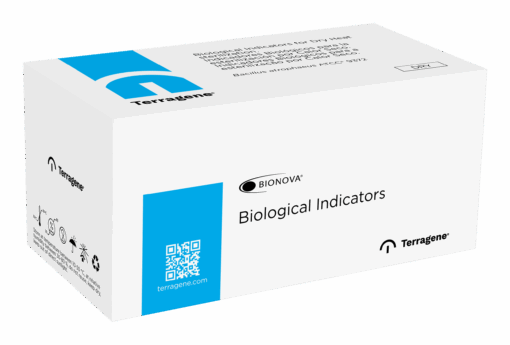
The Terragene Bionova BT30 is a two-tube biological indicator system designed specifically for monitoring dry heat sterilization processes at 160–180°C. It uses Bacillus atrophaeus ATCC® 9372 spores — the recognized challenge organism for dry heat sterilization — with a 48-hour color-change readout at 37 ± 2°C. No auto-reader is required. Available in Thailand from BCST — Biochem Scitech Co., Ltd.
The Terragene Bionova BT30 biological indicator for dry heat sterilization reaches Thailand through BCST, providing laboratories, glassware sterilization operations, pharmaceutical manufacturers, and dental facilities using hot-air ovens with a validated biological indicator specifically engineered for dry heat sterilization processes.
Biological Indicator Dry Heat Thailand — Why Dry Heat Requires A Different Indicator
Steam and dry heat are fundamentally different sterilization mechanisms. Steam kills microorganisms through moist heat — hydrolysis of proteins at relatively lower temperatures. Dry heat kills through oxidation — a different physical process requiring significantly higher temperatures and longer exposure times to achieve the same level of sterility assurance.
Consequently, a steam biological indicator cannot be used for dry heat monitoring. Geobacillus stearothermophilus — the challenge organism in steam BIs — is not the appropriate organism for dry heat validation. Furthermore, the physical format of a steam SCBI cannot withstand the 160–180°C temperatures required for dry heat sterilization.
The BT30 uses Bacillus atrophaeus ATCC® 9372 — the internationally recognized challenge organism for dry heat sterilization monitoring. This organism is more resistant to dry heat than G. stearothermophilus is to steam. Additionally, the two-tube system separates the spore-carrying component from the culture medium, allowing only the spore carrier to enter the hot-air oven while the medium remains protected.
The Two-Tube System Explained
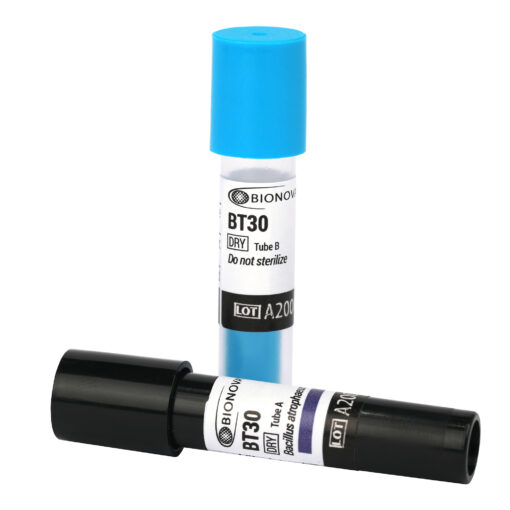
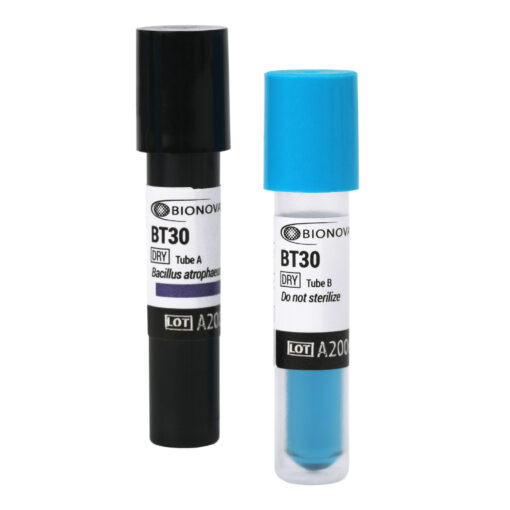
The BT30 consists of two physically separate components.
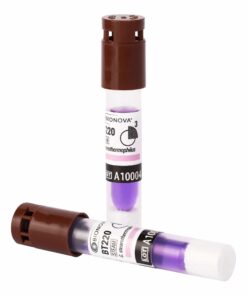
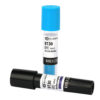
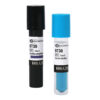
Tube A contains B. atrophaeus spores inoculated on a paper strip attached to the cap. It enters the hot-air oven together with the load. Tube B contains a glass ampoule of blue growth indicator medium. Unlike Tube A, it never enters the oven.. It remains outside and protected throughout the sterilization cycle. Furthermore, Tube B must never be exposed to dry heat — doing so would destroy the culture medium required for the biological readout.
After sterilization and cooling, the two tubes combine under aseptic conditions. The spore carrier paper from Tube A contacts the medium in Tube B during incubation. If surviving spores are present, they produce metabolic activity that changes the medium from blue to yellow — a clear, unambiguous positive result indicating sterilization failure. If sterilization was successful, the medium remains blue after 48 hours.
Directions For Use
Step 1 — Label Tube A with the sterilizer number, load number, and processing date.
Step 2 — Pack Tube A with the materials to be sterilized in an appropriate package. Place the package in the most inaccessible areas of the hot-air oven — typically the center of the load and near the door. Do not place Tube B in the oven.
Step 3 — Sterilize at 160–180°C as usual.
Step 4 — After the cycle completes, open the oven door and allow materials and Tube A to cool completely to room temperature. The chemical indicator on the label changes to brown, confirming heat exposure.
Step 5 — Under aseptic conditions (laminar flow or near a flame), break the ampoule inside Tube B by pressing on the bottom of the tube. Remove the cap from Tube B carefully, taking the tube by its base.
Step 6 — Remove the cap from Tube A, taking the tube by its base. Insert the cap of Tube A into Tube B so that the spore carrier paper contacts the culture medium. Ensure the carrier paper does not touch the exterior of Tube B or any other surface. Cap tightly.
Step 7 — Incubate at 37 ± 2°C for a maximum of 48 hours. Read results at convenient 10-hour intervals.
Step 8 — Always incubate a non-sterilized BT30 as a positive control simultaneously. The positive control must produce a yellow color change — confirming that the medium supports growth and incubation conditions are adequate.
Step 9 — A blue-to-yellow color change in the processed indicator at any reading point is a sterilization failure. Do not use the sterilizer until the cause is identified and resolved. A medium that remains blue at 48 hours confirms sterilization success.
Important: If the product is exposed to temperatures above 180°C or subjected to mechanical impact, the spore carrier may detach from the cap. In this case, transfer the carrier to the culture medium using a sterile clamp in a sterile environment under laminar flow or close to a flame.
Product Specifications
| Specification | Detail |
| SKU | TER-BT30 |
| Spore organism | Bacillus atrophaeus ATCC® 9372 |
| Sterilisation method | Dry heat, 160–180°C |
| Format | Two-tube system (Tube A + Tube B) |
| Readout method | Visual colour change — blue to yellow |
| Readout time | 48 hours maximum |
| Incubation temperature | 37 ± 2°C |
| Equipment required | Standard incubator at 37°C |
| Auto-reader required | No |
| Process indicator | Yes — changes to brown on heat exposure |
| Positive result (failure) | Blue medium changes to yellow |
| Negative result (success) | Medium remains blue at 48 hours |
| Storage | 10–30°C, 30–80% relative humidity, dark place |
| Shelf life | 2 years |
| Brand | Terragene |
| Supplier | BCST — Biochem Scitech Co., Ltd. |
Who Uses The BT30
Dry heat sterilization at 160–180°C serves specific applications where steam is inappropriate or undesirable — including glassware sterilization, powder and oil sterilization in pharmaceutical manufacturing, dental instrument sterilization in facilities using hot-air ovens, and certain laboratory and research sterilization applications. Additionally, any facility operating a Pasteur oven or hot-air sterilization cabinet requires dry heat-specific biological indicator monitoring. The BT30 serves all these applications with a validated, simple, instrument-free monitoring solution.
Standards Compliance
Terragene Bionova BT30 is manufactured in Argentina under ISO 9001-certified quality management. Parameters are validated against USP and ISO 11138 standards for biological indicators. Contact BCST for batch Certificate of Analysis documentation.
Available in Thailand from BCST — Biochem Scitech Co., Ltd. Contact BCST for pricing, volume requirements, and technical documentation.
Related products
-

Terragene Bionova Biological Indicator for Steam Sterilization (Select Readout Time)
Price range: 10,385.00 ฿ through 13,400.00 ฿Select options This product has multiple variants. The options may be chosen on the product page